

Best Affordable Fashion for 2026: Smart Style Guide
Table of Contents
- What Defines the Best Affordable Fashion for 2026
- 2026 Trends That Actually Fit a Budget
- How to Build a Capsule Wardrobe on a Budget
- Best Online Stores for Unique Fashion Finds
- Affordable Sustainable Clothing Brands and What to Look For
- Cost-per-Wear: The Math That Beats Cheap Fast Fashion
- Fabric Quality, Fit, and Care: Making Affordable Pieces Last
- Frequently Asked Questions
Last Updated: September 16, 2026
What Defines the Best Affordable Fashion for 2026
The best affordable fashion for 2026 holds its shape, fits your real measurements, and costs little enough per wear that you stop thinking about the price tag. This guide from Jessiz Boutique covers the trends, stores, and fabrics worth your money.
2026 Trends That Actually Fit a Budget
Trend forecasting for 2026 favors relaxed silhouettes, vintage washes, and matching sets, all cheap to produce well at accessible price points.
Wardrobe Staples Worth Buying First
Build around these five categories before chasing anything trendier:
- One great pair of jeans in a wash you'll wear weekly
- A matching set that works for errands, travel, and casual dinners
- A layering piece like a zip-up hoodie or knit top
- One pair of versatile pants in a solid neutral
- A transitional jacket or overshirt for shoulder seasons
A common mistake is buying five cheap versions of one staple instead of one good version. The Camden Vintage-Wash Baggy Jeans at $38 cover the relaxed denim trend and pair with tees, hoodies, and boots year-round.

How to Build a Capsule Wardrobe on a Budget
A capsule wardrobe on a budget starts with 25 to 35 pieces that each mix into at least three outfits. The goal is versatility, not minimalism for its own sake.
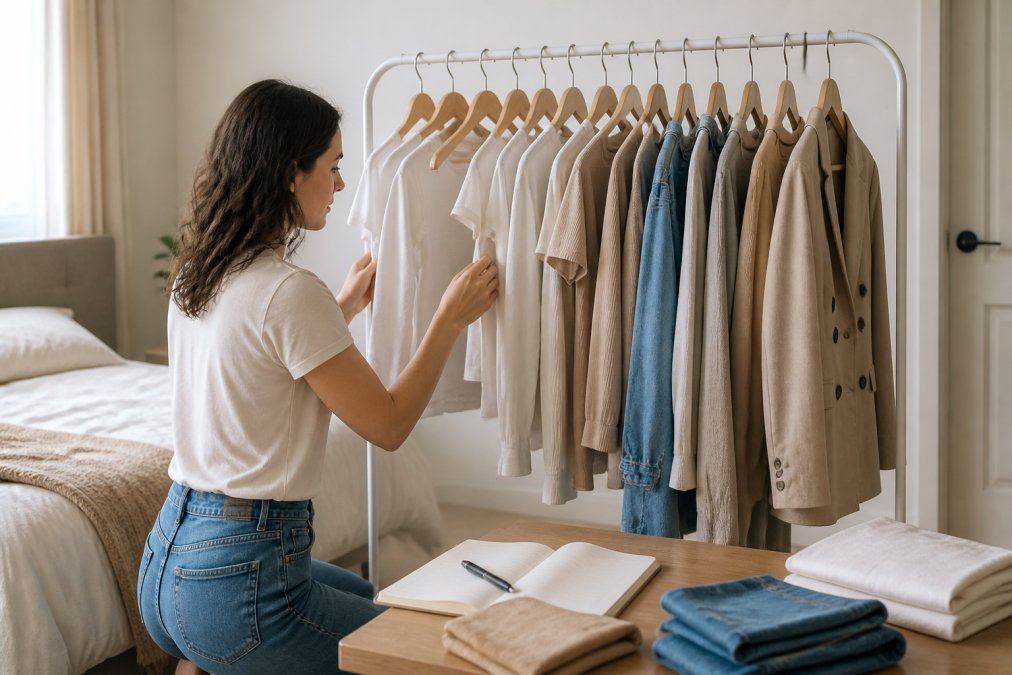
The process:
- Audit what you own. Note what you wore in the last 30 days.
- Set a color palette. Two neutrals, two accents. Everything new must fit.
- Fill gaps, not duplicates. Four black tees means no fifth.
- Buy for three outfits minimum. If a piece can't make three looks, skip it.
- Shop sets first. Matching sets give you two pieces and multiple outfit options at one price point.
Best Online Stores for Unique Fashion Finds
The best online stores for unique fashion are boutiques that curate small collections rather than listing thousands of near-identical items. Curation makes a piece feel like yours, but fit is where most online purchases fail.
The Four-Point Boutique Check
Before buying from any online boutique, verify these four things. If a store can't answer all four, treat it as a gamble.
| What to Check | Why It Matters | What Good Looks Like |
|---|---|---|
| Size charts | Sizing varies wildly between brands | Actual measurements in inches, not just S/M/L |
| Fabric composition | Determines how the piece wears and washes | Percentages listed per garment |
| Fit notes | Flags running small or large | Clear guidance on sizing up |
| Return policy | Protects you if the fit is wrong | Written terms, easy process |
How to Find Consistent Sizing Across Different Retailers
Order your usual size from three boutiques and you get three different fits. The fix: shop by measurement, not size label.
- Take your measurements once and keep them. Bust or chest, natural waist, hip at the fullest point, and inseam, saved in your phone. Check every size chart against those four numbers, not the size you wore elsewhere.
- Compare flat measurements to a piece you already own and love. Lay your favorite jeans flat, measure the waistband and inseam, and compare to the listing, more reliable than any size chart because it accounts for real stretch and recovery.
- Read fabric composition before trusting the size. A 98% cotton / 2% spandex denim fits differently after an hour than a 70% cotton / 28% polyester / 2% spandex blend. More cotton = less give; more synthetic = more stretch but more bagging out.
- Look for extended size runs, not "plus" as an afterthought. A brand that grades patterns from 0 through 3X and publishes measurements for every size is doing the work; a separate, differently patterned plus line usually isn't.
- Check the model's height and size worn. A 5'9" model in a size small won't show the same hem on a 5'3" shopper. This one data point prevents more returns than any other.
- When between sizes, size up in structured fabrics and size down in knits. Structured denim and woven tops don't stretch; ribbed knits and jersey do.
Reading Reviews for Fit Signals
A few review patterns are reliable:
- "Runs small" appearing three or more times is a real signal. One mention is an outlier.
- Height and weight in the review makes feedback usable. "Fits true to size" from a different body type tells you nothing.
- Photos in reviews show real drape, hem length, and color, three things product photography distorts.
- Reviews that mention washing tell you whether the piece survived its first cycle, the earliest test of quality.
A Quick Note on Marketplaces vs. Boutiques
Large marketplaces offer selection and easy returns, but the same listing is often sold by dozens of sellers with identical stock photos and wildly different size charts. Boutiques carry less but stay consistent, because one team chooses what to carry and stands behind it. For unique pieces you'll actually wear, the boutique model usually wins on fit accuracy, which keeps cost per wear low.
Affordable Sustainable Clothing Brands and What to Look For
Affordable sustainable clothing is made with fewer, better materials in smaller runs, reducing waste without luxury prices. You don't need a designer budget to shop responsibly, but you do need to know which claims are verifiable and which are marketing.
- Cotton (ideally organic or recycled): breathable, holds shape, biodegrades. Conventional cotton is water-intensive; organic and recycled reduce that footprint. Look for at least 90% cotton in denim.
- Linen and hemp: strong natural fibers that soften with washing and resist pilling. Often blended with cotton to cut cost.
- Tencel lyocell and modal: wood-pulp fibers made in a closed-loop process that recovers most of the solvent. Drape well, resist wrinkling, common in budget-friendly sets.
- Recycled polyester (rPET): diverts plastic from landfills and resists wrinkles, but still sheds microfibers in the wash. Best in outerwear and structured pieces, not next-to-skin knits.
- Conventional polyester and acrylic: cheap, durable, wrinkle-resistant, but they pill, hold odor, and don't biodegrade. Fine for a $20 layering piece; poor for a staple you want to keep three years.
Beyond fiber, look for:
- Third-party certifications rather than self-declared claims. Verifiable ones include GOTS (organic textiles), OEKO-TEX Standard 100 (tested for harmful substances), and bluesign (responsible chemical use in manufacturing).
- Small-batch collections rather than weekly drops. Fewer, deeper runs mean less deadstock and less discount pressure.
- Repairable construction, standard five-pocket styling, belt loops, reinforced seams, replaceable buttons. If a tailor can fix it, it lasts.
- Care instructions included, signaling the maker expects the piece to survive more than a season.
- Transparent supplier lists or factory disclosures. A brand that names its factories usually has something to stand behind.
Resale and Second-Hand: The Other Half of Sustainable Shopping
Buying second-hand is the most affordable sustainable option, because the garment already exists, no new fiber, water, or dye required. It also surfaces pieces no longer in production, so you find unique items at a fraction of retail.
A practical resale workflow:
- Search by fabric, not by brand. Filter for "100% cotton," "linen," or "wool" and you'll skip most of the disposable inventory.
- Ask for measurements, not sizes. A vintage medium is not today's medium. Request pit-to-pit, waist, and inseam in inches.
- Request photos of seams, hems, and underarms. These are where wear shows first.
- Check the return window before you bid or buy. Many peer-to-peer platforms are final sale.
- Budget for one alteration. A $12 hem can turn a $15 thrift find into a staple you wear weekly.
Cost-per-Wear: The Math That Beats Cheap Fast Fashion
Cost per wear is the purchase price divided by the number of times you actually wear the item. It's the single most useful number in budget fashion, and almost nobody calculates it.
Cost per wear = Price ÷ Number of wears
Run it on two options:
- A $20 top worn 3 times = $6.67 per wear
- A $48 matching set worn 20 times = $2.40 per wear
Use this checklist before any purchase:
- Can I name three outfits this works with?
- Will I wear it at least 15 times?
- Does the fabric survive regular washing?
- Does the fit work without alterations?
Fabric Quality, Fit, and Care: Making Affordable Pieces Last
Fabric composition decides how an affordable piece performs after five washes. Read the label before the price tag.
What to look for:
- Cotton above 90% in denim for structure that doesn't sag
- 2-6% spandex for stretch that recovers instead of stretching out
- Polyester blends for knitwear and sets that resist wrinkling
- Rayon for drape and softness in tops and pants
Frequently Asked Questions
What are the biggest fashion trends for 2026?
2026 leans into relaxed silhouettes, vintage-inspired washes, and matching sets that work for multiple occasions. Baggy and cropped denim, off-shoulder knits, and monochromatic two-piece outfits dominate. Layering pieces in neutral color palettes make it easy to mix affordable finds with what you already own. The key is choosing trends that fit your existing wardrobe rather than chasing every micro-trend, which keeps spending low and versatility high.
How can I find high-quality clothing on a budget?
Check fabric composition before buying. Cotton-rich denim with a small percentage of spandex, like 90% cotton and 2% spandex, holds shape and lasts longer than cheaper blends. Look for details like reinforced seams, functional pockets, and accurate size charts. Shopping curated boutiques that publish real product measurements helps you avoid returns and get pieces that actually fit, which saves money over time.
What is the 3-3-3 rule for clothes?
The 3-3-3 rule is a minimalist wardrobe guideline: three tops, three bottoms, and three pairs of shoes that can be mixed into nine different outfits. It simplifies packing and daily dressing while forcing you to choose versatile pieces. Building around a small core of wardrobe staples, like a matching set, a pair of well-fitting jeans, and a neutral layer, makes it easier to stay stylish without overspending.
How do I identify affordable sustainable clothing brands?
Look for brands that share material composition, care instructions, and sourcing details on product pages. Affordable sustainable clothing brands often focus on durable fabrics, timeless designs, and smaller curated collections rather than constant new drops. Transparency about materials and fit reduces waste from returns. Prioritizing quality over quantity and choosing pieces you will wear repeatedly is the most practical form of sustainable shopping on a budget.
Which affordable clothing brands offer the best value for money in 2026?
Value comes down to cost-per-wear, not sticker price. A $48 matching set worn weekly for a year costs less per wear than a $15 top worn twice. Brands that publish detailed measurements, offer size-inclusive ranges, and use durable fabrics deliver the best value. Jessiz Boutique, for example, lists fabric composition and size charts for each piece, which helps you buy right the first time and avoid the hidden cost of returns.
Building a wardrobe you actually wear takes more discipline than budget. The challenge isn't finding low prices; it's resisting them when the piece won't earn its place. At Jessiz Boutique, we curate trendy pieces with published measurements, honest fit notes, and pricing that holds up under cost-per-wear math, from matching sets and denim to everyday essentials for women and men. Get started with Jessiz Boutique and build a wardrobe where every piece pulls its weight.