

How to Build a Capsule Wardrobe: 2026 Guide
Table of Contents
- What a Capsule Wardrobe Actually Is (and Why It Works)
- How to Declutter Your Closet Before You Build
- Choosing Your Capsule Wardrobe Color Palette
- Your Capsule Wardrobe Checklist: Essential Items by Category
- Building a Capsule Wardrobe on Any Budget
- Mixing, Matching, and Dressing for Your Body Type
- Seasonal Transitions and Capsule Wardrobe Maintenance
- Conclusion
Last Updated: August 19, 2026
Most people open their closets every morning, stare at a packed rack of clothes, and feel like they have nothing to wear. A capsule wardrobe solves that paradox. This guide walks you through every step, from closet audit to seasonal maintenance, with specific item recommendations and budget strategies you can use right now.
A capsule wardrobe is a deliberately small, cohesive set of versatile pieces that mix and match freely, so every item earns its place. According to the Ellen MacArthur Foundation's research on fashion consumption, the average garment is worn far fewer times than its quality justifies before being discarded. A capsule wardrobe flips that equation: you buy less, wear more, and spend less time getting dressed.
Below, we'll cover decluttering, choosing a color palette, building your checklist by category, planning for any budget, dressing for your body type, and rotating pieces across seasons.
What a Capsule Wardrobe Actually Is (and Why It Works)
A capsule wardrobe is a curated collection of timeless, high-quality clothing items, typically 25 to 50 pieces, chosen to work together across multiple outfits and occasions. The concept was popularized by London boutique owner Susie Faux in the 1970s and refined by Donna Karan's "Seven Easy Pieces" collection.
It works for three reasons. First, intentional shopping replaces impulse buying. When you know exactly what your wardrobe needs, you stop filling gaps with pieces that don't fit the system. Second, cost per wear drops dramatically. A $74 pair of high-quality slim jeans worn 150 times costs less per wear than a $20 pair worn 10 times. Third, a neutral palette with deliberate accent colors means almost every combination works.

The slow fashion movement reinforces this approach. As the Sustainable Apparel Coalition's Higg Index framework documents, garments with longer useful lives have significantly lower environmental footprints per use.
How to Declutter Your Closet Before You Build
Decluttering is essential. Skip it, and you'll build your capsule wardrobe on top of a cluttered foundation, and the whole system falls apart within weeks.
The Wardrobe Audit Method
Pull everything out of your closet and lay it flat. This physical act of seeing your full inventory at once is what makes the process work.
Evaluate each piece against these four questions:
- Does it fit my body right now, not the body I'm working toward?
- Have I worn it in the last 12 months?
- Does it coordinate with at least three other items I already own?
- Is it in good condition (no pilling, fading, or broken hardware)?
Items that fail two or more of these questions are candidates for removal.
What to Keep, Donate, or Toss
Create three physical piles as you work through your audit:
- Keep: Fits well, worn regularly, coordinates with multiple pieces, good condition
- Donate or sell: Good condition but doesn't fit the system; consignment stores and resale platforms are good options
- Toss: Worn out, damaged, or beyond repair
Avoid keeping "maybe" items in a fourth pile. If you genuinely can't decide, box the item and store it for 30 days. If you don't reach for it once, donate it.
After the audit, most people find their wardrobe shrinks by 30 to 50 percent. Closet organization becomes dramatically easier when you're working with fewer, better pieces.
Choosing Your Capsule Wardrobe Color Palette
Your color palette is the architecture of your capsule wardrobe. Get it right, and every piece coordinates naturally.
Neutrals as Your Foundation
A neutral palette forms the backbone of any functional capsule wardrobe. Neutrals, white, black, navy, grey, camel, cream, and olive, coordinate with almost everything. Build roughly 70 to 80 percent of your capsule from neutrals, giving you a base where every top can pair with every bottom without clashing.
Adding Accent Colors Without Losing Versatility
The remaining 20 to 30 percent of your capsule can include one or two accent colors that add personality without breaking the system. Your accent colors must coordinate with your neutral base.
Good accent choices: rust, burgundy, forest green, dusty blue, or warm terracotta. These tones work across seasons and pair naturally with most neutral palettes. Avoid neons, highly saturated colors, or prints that only work with one specific neutral.
Your Capsule Wardrobe Checklist: Essential Items by Category
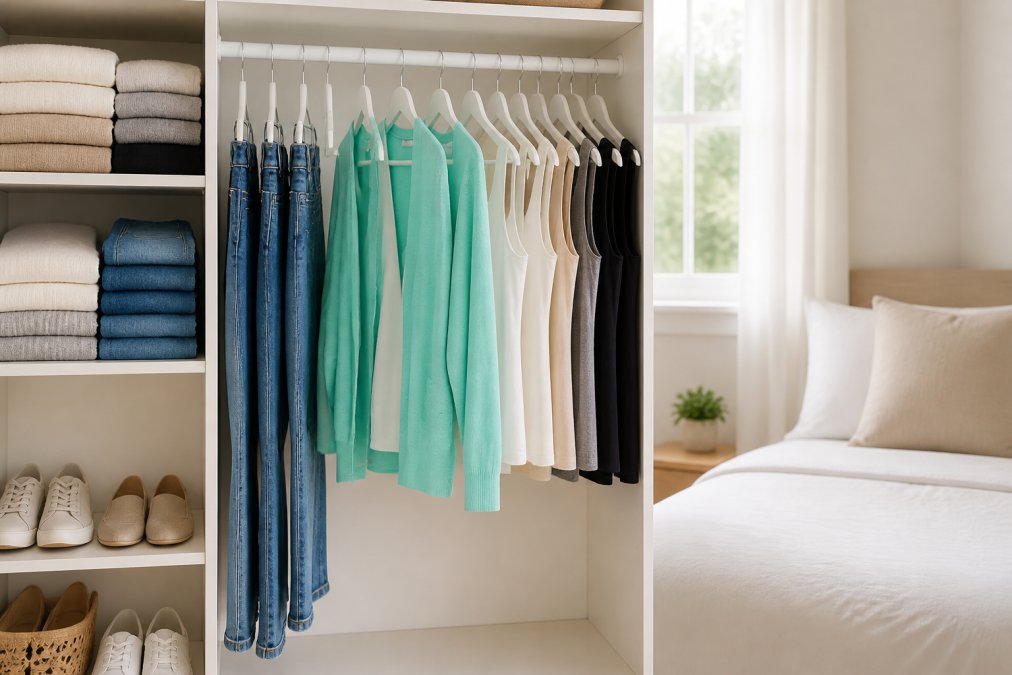
The ideal capsule wardrobe size for most people is 33 to 37 pieces, including clothing, shoes, and accessories, but excluding workout clothes, sleepwear, and heavily seasonal outerwear.
Tops and Layering Pieces
Target 8 to 12 tops total, weighted toward neutrals with a couple of accent pieces.
Essential tops:
- 2-3 basic tees or tanks in white, grey, or black
- 1-2 long-sleeve tops for layering
- 1-2 button-down shirts (white or chambray)
- 1-2 layering pieces (cardigan or lightweight jacket)
The Zenana Ribbed Washed Round Neck Tank is a strong foundation piece; the ribbed texture adds visual interest and it layers easily under the Autumn Open Front Cardigan, made from 70% viscose and 30% nylon for a polished drape. For a slightly more structured top, the Basic Bae Asymmetrical Neck Long Sleeve Top adds an edge to neutral bottoms.


Bottoms and Outerwear
Bottoms need to be excellent, even if fewer in number.
Essential bottoms and outerwear:
- 2 pairs of jeans (one slim, one relaxed or straight)
- 1-2 pairs of tailored trousers or chinos
- 1 casual pant option
- 1-2 skirts or dresses (optional, based on lifestyle)
- 1 structured outer layer (blazer or trench coat)
- 1 casual outer layer (denim jacket or bomber)
The Judy Blue High Waist Distressed Slim Jeans are a versatile investment piece; the high-waist cut flatters many body types and transitions from casual to smart-casual. For a relaxed-fit option, the Davi & Dani Drawstring Baggy Pants with Pockets provide comfort without sacrificing style.
Essential Accessories
Target 5 to 8 accessories total.
| Category | Recommended Pieces | Role in Capsule |
|---|---|---|
| Shoes | 3-4 pairs | Sneakers, ankle boots, sandals, one formal option |
| Bags | 2 bags | Everyday tote, structured crossbody |
| Belts | 1-2 belts | One neutral leather, one casual |
| Jewelry | 3-5 pieces | Simple gold or silver staples |
| Scarves/Hats | 1-2 pieces | Seasonal transitions |
Essential accessories should follow the same color rules as your clothing: neutrals first, with one or two accent pieces that coordinate with your palette.
Building a Capsule Wardrobe on Any Budget
Budget tier (under $300 total): Focus on three anchor pieces first, one pair of versatile jeans, one neutral top, and one layering piece. Build outward over several months. Second-hand shopping through consignment stores and resale platforms is effective at this tier. Prioritize fit over brand.
Mid-range tier ($300 to $700): Allocate roughly 60 percent of your budget to bottoms and outerwear, the pieces with the highest cost per wear impact. Tops and accessories can be filled with more affordable options.
Investment tier ($700 and above): Prioritize high-quality fabrics and construction. Wool, cashmere, silk, and quality denim hold their shape and color significantly longer. Each piece should last five or more years with proper care. Calculate cost per wear before buying: a $150 cashmere sweater worn 100 times costs $1.50 per wear.
As the Council of Fashion Designers of America's sustainability resources notes, intentional purchasing is the single most effective action individual consumers can take to reduce fashion waste.
Mixing, Matching, and Dressing for Your Body Type
The real test of a capsule wardrobe is whether the pieces actually combine into outfits and work for your specific body.
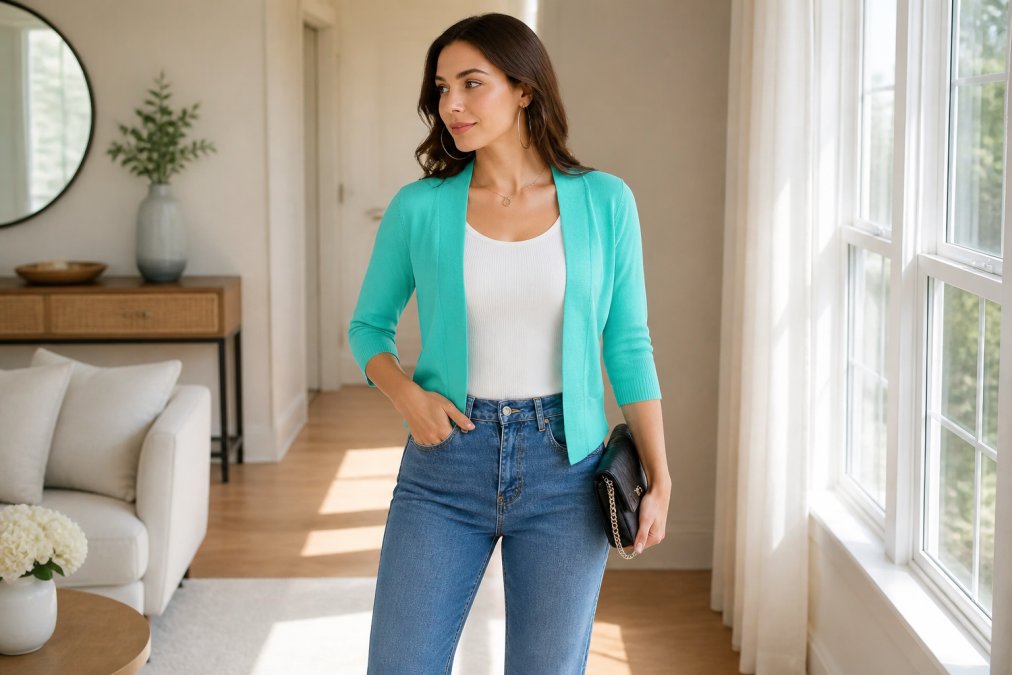
With a neutral base, you can cycle through combinations systematically: a single 10-piece travel capsule (5 tops, 3 bottoms, 2 outer layers) produces over 30 distinct outfits.
For body type considerations:
- Hourglass shapes: High-waist bottoms and fitted tops define the waist naturally. The Judy Blue High Waist Slim Jeans are specifically built for this.
- Pear shapes: Darker bottoms with lighter or more detailed tops draw the eye upward. Flared or wide-leg trousers balance proportions.
- Apple shapes: Relaxed-fit tops with straight-leg or slim pants create clean vertical lines.
- Rectangle shapes: Layering creates the illusion of curves. An open-front cardigan over a fitted tank adds dimension.
- Petite frames: Monochromatic outfits elongate the silhouette. Avoid wide-leg pants unless cropped to the ankle.
Fit matters more than style category. A perfectly fitted basic will always look better than a trend piece in the wrong size.
Seasonal Transitions and Capsule Wardrobe Maintenance
A functional capsule wardrobe evolves across seasons. Maintain two capsule modules: a core capsule of 20 to 25 pieces that stays consistent year-round (denim, neutral tops, versatile layers), and a seasonal module of 8 to 12 pieces that rotates in and out twice a year.
Spring/Summer rotation: Swap heavy outer layers for lightweight cardigans and denim jackets. Add one or two linen or cotton pieces.
Fall/Winter rotation: Introduce heavier knits, a structured coat, and warmest layering pieces. Transition accent colors toward deeper tones.
Maintenance and laundry care:
- Wash denim inside-out in cold water to preserve color
- Machine wash cold and tumble dry low for blended fabrics
- Air-dry knits flat rather than hanging
- Store folded pieces in breathable cotton or linen bags if packing away for a season
- Treat stains immediately
As the American Cleaning Institute's fabric care guidelines documents, following garment care labels precisely is the single most effective way to extend the life of clothing.
Capsule wardrobe audit schedule: Run a full wardrobe audit twice a year, in March before the spring rotation and in September before the fall rotation.
| Season | Core Capsule | Seasonal Module | Audit Timing |
|---|---|---|---|
| Spring/Summer | 20-25 pieces | 8-12 lightweight pieces | March |
| Fall/Winter | 20-25 pieces | 8-12 heavier pieces | September |
Building a capsule wardrobe is one of the most practical things you can do for your daily routine, your budget, and your closet space. Jessiz Boutique's curated collection is built around exactly that need: affordable, high-quality staples like the Zenana Ribbed Tank, Judy Blue Slim Jeans, and Autumn Open Front Cardigan that anchor a real capsule wardrobe without breaking your budget. Shop now and start building a wardrobe that works as hard as you do.
Frequently Asked Questions
How many items should be in a capsule wardrobe?
Most capsule wardrobes contain between 25 and 50 pieces, including clothing, shoes, and accessories. A common starting point is 33 items per season, a formula popularized by the Project 333 method. The right number depends on your lifestyle, someone who works from home needs fewer pieces than someone who attends frequent events. Focus on items that each serve at least three different outfit combinations rather than hitting a specific number.
What is the 5-4-3-2-1 capsule wardrobe method?
The 5-4-3-2-1 method gives you a simple item-count formula: 5 tops, 4 bottoms, 3 outer layers, 2 pairs of shoes, and 1 bag or accessory set. It's designed as a travel or minimalist starter kit, not a full wardrobe solution. The formula works well for packing or building a secondary travel capsule, but most people expand it to cover workwear, activewear, and occasion dressing when applying it to their full closet.
What are the most common capsule wardrobe mistakes to avoid?
The biggest mistakes are buying everything in one color family without any contrast, choosing pieces that don't actually fit your daily life, and shopping impulsively for trends before the foundation is solid. Another common error is skipping the declutter step, adding capsule pieces to a cluttered closet defeats the purpose. Finally, many people underestimate fabric quality. A $30 top that pills after five washes costs more per wear than a $60 top that holds up for three years.
How do I choose a color palette for my capsule wardrobe?
Start with two to three neutral base colors, black, white, navy, camel, or gray are the most versatile. Every piece in your neutral palette should mix and match with every other piece. Then add one or two accent colors that complement your skin tone and appear in at least three to four items so they still coordinate. Avoid buying accent pieces in colors that only work with one specific outfit, since those items reduce your mix-and-match options significantly.
Can a capsule wardrobe work for all seasons?
Yes, with a layering strategy. The core approach is to build a year-round base of neutral, mid-weight pieces and rotate seasonal layers in and out. Lightweight cardigans and open-front knits bridge spring and fall. Heavier outer layers and thicker fabrics handle winter. Swapping roughly 8 to 12 seasonal items twice a year keeps your capsule wardrobe functional without requiring a complete overhaul each season. Store off-season pieces in labeled bins to protect fabric quality.
What is the 70/30 wardrobe rule?
The 70/30 rule suggests that 70% of your wardrobe should be timeless, versatile staples, classic denim, basic tees, tailored trousers, neutral outer layers, while the remaining 30% can include trendier or more expressive pieces. This balance keeps your closet functional and cost-effective while still leaving room for personal style. It also prevents the common trap of a wardrobe full of statement pieces that don't coordinate with each other.
This article was written using GrandRanker