

How to Choose Resort Wear for Men: Tropical Vacation Guide
Table of Contents
- Understanding Resort Dress Codes for Men
- Best Fabrics for Tropical Weather
- Daytime vs. Evening Attire at the Resort
- Building Your Men's Vacation Packing List
- Choosing Footwear and Accessories for Resort Settings
- How to Transition Outfits from Day to Evening
- Maintenance and Care Tips for Resort Wear
- Conclusion
Last Updated: August 27, 2026
Understanding Resort Dress Codes for Men
Resort dress codes exist on a spectrum, and understanding where your destination falls is the first step in packing smart. Most tropical resorts operate under an informal hierarchy: daytime is relaxed and casual, while evenings shift toward smart-casual or resort casual. This distinction matters because it changes what you actually need to pack.
The key insight most travelers miss is that "resort casual" doesn't mean wearing whatever you want. It means intentional, put-together casual. Think structured fabrics, clean lines, and pieces that look deliberate rather than thrown together. At Jessiz Boutique, we focus on versatile pieces that work across multiple settings without requiring a massive wardrobe.
Most resorts enforce a few non-negotiable rules: no beachwear in restaurants or common dining areas, no athletic wear in evening venues, and no overly casual gym clothes anywhere except poolside. Beyond that, the boundaries are flexible. A well-fitted short-sleeved shirt works for lunch, dinner, or casual evening drinks. Tailored shorts transition seamlessly from day to night when paired with the right top and footwear.
The real advantage of understanding these unwritten codes is that you can pack fewer pieces and mix them more effectively. Instead of bringing separate "day" and "night" wardrobes, you're building a capsule that works across contexts with minimal adjustment.
Best Fabrics for Tropical Weather
Fabric choice determines whether you'll feel comfortable or miserable in tropical humidity. The wrong material will cling to your skin, wrinkle excessively, and require constant adjusting. The right fabric breathes, resists moisture buildup, and maintains its shape despite sweat and salt water exposure.
Why Linen and Cotton Blend Work Best
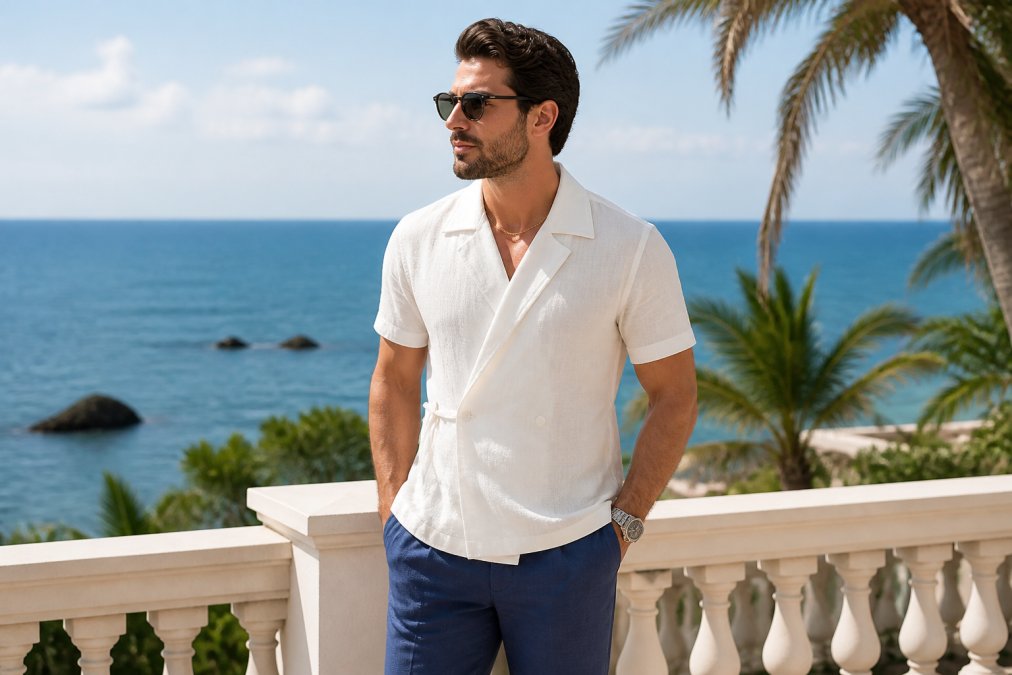
Linen is the gold standard for tropical climates because it's naturally moisture-wicking and incredibly breathable (peer-reviewed research). The fiber structure creates air channels that allow sweat to evaporate quickly rather than pooling against your skin. A 65% linen and 35% polyester blend, like the material used in Jessiz Boutique's Men's Short-Sleeved Wrap Shirt, combines linen's breathability with polyester's durability and wrinkle resistance (peer-reviewed research). Pure linen wrinkles heavily, which is fine if you like that aesthetic, but a blend gives you the tropical performance without constant ironing.

Cotton is your second-best option. It breathes well and feels soft against skin, but it absorbs moisture rather than wicking it away, meaning you'll feel damp longer (peer-reviewed research). Cotton also wrinkles more readily than blends. For resort wear, prioritize cotton-blend fabrics over 100% cotton when possible.
The practical difference shows up around hour three of wearing the same shirt. Linen-blend pieces feel fresh; pure cotton starts clinging. In a tropical climate where you're moving between air-conditioned interiors and humid exteriors repeatedly, that difference compounds throughout the day.
Performance Fabrics for Humidity
Moisture-wicking synthetic blends are gaining ground in resort wear. These engineered fabrics pull sweat away from skin and dry faster than natural fibers. They're particularly useful if you plan to swim, snorkel, or spend extended time outdoors, since they bounce back to dry condition within minutes rather than hours.
The trade-off is feel. Performance fabrics can feel less luxurious against skin compared to linen or cotton. They're also less breathable in static situations, if you're sitting at dinner, a natural fiber will feel cooler. But for active tropical days, they're practical. Look for blends that combine synthetic performance with a percentage of natural fiber to balance comfort and functionality.
Daytime vs. Evening Attire at the Resort
Daytime resort wear prioritizes comfort and practicality. You're moving between pool, beach, casual dining, and activities. Clothing should be loose enough to move freely, breathable enough to handle heat and humidity, and quick-drying if you're near water.
Evening attire tightens the fit slightly and introduces more structure. Shorts become chino shorts instead of athletic cuts. Shirts gain a more tailored fit. Colors can be bolder or more sophisticated. The difference isn't dramatic, you're not moving into formal wear, but the intentionality shifts. An evening look acknowledges that you're in a shared dining or social space where presentation matters slightly more.
The practical advantage of this distinction is that you can wear the same base pieces during the day in a relaxed fit and styling, then elevate them at night through fit, accessories, and layering. A linen shirt works at lunch with casual shorts and sandals; the same shirt works at dinner with tailored chino shorts and loafers.

Building Your Men's Vacation Packing List
A strategic packing approach means you're not choosing between a massive suitcase and constant laundry. The goal is a capsule wardrobe where most pieces work together across multiple outfits.
Essential Pieces to Pack
Start with three to four quality short-sleeved shirts in neutral colors: white, cream, light gray, or soft khaki. These form the foundation of both daytime and evening looks. Add one patterned or tropical-print shirt for visual variety. The Jessiz Boutique Men's Short-Sleeved Wrap Shirt at $38 offers that linen-blend breathability in a trendy wrap design that works across casual and slightly elevated settings.
Bottoms should include two pairs of chino shorts in neutral tones and one pair of casual shorts for poolside or beach activities. The Jessiz Boutique Men's Summer Style Trendy Sports Casual Shorts at $33 deliver that micro-elastic polyester blend with a cotton-like feel, transitioning smoothly from daytime casual to evening resort casual. Add one pair of lightweight linen or linen-blend pants for evenings if your resort leans toward dressier dining.
For layering, pack one lightweight cardigan or overshirt. Resort air-conditioning can be aggressive, and a layer adds versatility without bulk. The Jessiz Boutique Men's Short-Sleeve and Long-Pants Two-Piece Set at $42 works here if you prefer a coordinated loungewear option for relaxed evenings.

Undergarments and socks should prioritize moisture-wicking materials. Pack more underwear than you think you'll need, tropical humidity makes laundry cycles shorter.
Capsule Wardrobe Strategy
A capsule approach means every piece works with at least two others. Your three base shirts should pair with both your chino shorts and your casual shorts. Your neutral bottoms should pair with every top. This creates roughly 12-15 outfit combinations from just 5-6 core pieces.
The strategy reduces decision fatigue and packing volume simultaneously. You're not bringing "outfits", you're bringing components that remix. A white linen shirt works with khaki shorts for daytime and chino shorts for evening. That same shirt works under a lightweight cardigan for air-conditioned restaurants.
Color coordination matters. Stick to a palette: neutrals (white, cream, gray, khaki, navy) with one accent color (soft coral, sage green, or light blue). Every piece should work with every other piece within that palette. This constraint forces intentional packing and eliminates the problem of bringing pieces that don't coordinate with anything else.
Choosing Footwear and Accessories for Resort Settings
Footwear transitions between casual and elevated contexts. For daytime, sandals and flip-flops are standard. For evening, you need something slightly more refined that still works in a warm climate.
Loafers are the resort wear standard for evening. They're dressy enough for dining without feeling formal, they work in warm weather, and they transition smoothly from pool to restaurant without requiring a full shoe change. Espadrilles offer a similar vibe with a more relaxed aesthetic. Both work with shorts or lightweight pants.
Accessories amplify your outfits without adding bulk. A quality watch, sunglasses, and a simple bracelet or two add polish without requiring extra packing space. A lightweight scarf or neck piece can elevate a basic shirt for evening. Hats serve dual purposes: sun protection during the day and a style element that changes your look.
The key with accessories is restraint. You're not trying to accessorize like you're at home; you're adding functional pieces that happen to look good. A sun hat protects your face and adds character. Sunglasses are essential and should be quality, cheap sunglasses are uncomfortable and obvious. A watch is practical and works with everything.
How to Transition Outfits from Day to Evening
The magic of resort wear is that you can wear the same pieces in different configurations. The transition happens through fit adjustments, layering, and footwear swaps.
Your daytime linen shirt worn untucked with casual shorts and sandals is relaxed and practical. That same shirt tucked into chino shorts with loafers and a simple bracelet reads as evening-appropriate. The piece itself hasn't changed; the presentation has.
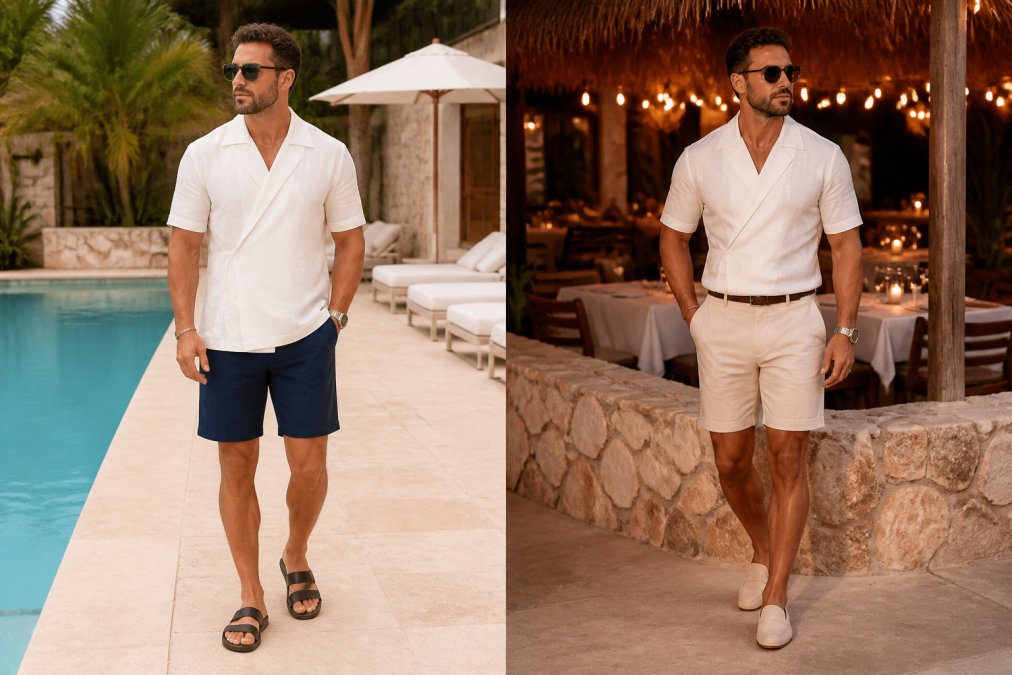
Layering accelerates the transition. A lightweight cardigan over your evening shirt adds structure and visual interest. It signals that you've made an effort without requiring a completely different outfit. The cardigan comes off if you're warm, but it's there for air-conditioned spaces and creates a more intentional silhouette.
Footwear changes are the most dramatic transition tool. Swapping sandals for loafers instantly elevates any outfit. It's a single change that signals context shift without requiring a wardrobe overhaul.
The practical advantage is that you can wear fewer total pieces while maintaining variety. A piece worn three different ways, casual daytime, elevated daytime, and evening, multiplies your effective wardrobe without multiplying your luggage.
Maintenance and Care Tips for Resort Wear
Tropical environments accelerate wear on clothing. Salt water, chlorine, intense sun, and high humidity all degrade fabrics faster than typical conditions. Strategic care extends the life of your pieces and keeps them looking fresh throughout your trip.
Rinse salt water and chlorine immediately after exposure. Both are corrosive to fibers and will set stains if left to dry. A quick freshwater rinse in your room shower prevents permanent damage. For chlorine exposure, soak the piece in cool water with a bit of white vinegar to neutralize the chemical.
Hand-wash delicate pieces rather than using resort laundry services when possible. Resorts often use aggressive washing and high heat that damages fabrics unnecessarily. A gentle hand-wash in cool water with mild detergent preserves color and fabric integrity. Linen and cotton-blend pieces actually benefit from this approach, they dry quickly and maintain their shape better than machine-washed alternatives.
Air-dry everything. The tropical sun and breeze are your friends here. Hanging pieces in shade prevents fading while still using natural airflow. Avoid direct intense sunlight on colored pieces; the UV exposure fades colors rapidly.
For wrinkles, embrace them or pack a small travel steamer. Linen wrinkles are part of the aesthetic, many travelers actually prefer the lived-in look. If you prefer crisp presentation, a compact steamer takes up minimal space and works on most fabrics. Hotel irons are often too hot and damage delicate tropical fabrics.
Packing for storage matters when you return home. Ensure pieces are completely dry before packing. Tropical humidity can cause mildew if damp clothing is sealed in luggage. Store in breathable garment bags rather than plastic, and consider cedar blocks or lavender sachets to prevent odor and insect damage during off-season storage.
Choosing the right resort wear for men tropical vacation situations comes down to understanding fabric behavior in heat and humidity, building a capsule wardrobe that remixes effectively, and maintaining pieces throughout your trip. At Jessiz Boutique, we've curated pieces specifically designed for this purpose, breathable linen blends, versatile shorts that work across contexts, and quality construction that holds up to tropical conditions. Start with our Men's Short-Sleeved Wrap Shirt and Men's Summer Style Trendy Sports Casual Shorts as your foundation pieces, then layer in accessories and layering options. The result is a simplified packing strategy that gives you variety, comfort, and the confidence that every piece works together. Shop now and build your resort wear capsule with pieces designed for both style and tropical performance.
Frequently Asked Questions
Q: What is the difference between resort casual and resort evening dress codes?
A: Resort casual is daytime wear focusing on comfort and breathability: shorts, lightweight shirts, and sandals. Resort evening elevates this to smart-casual or business casual, typically requiring long pants or chino shorts, collared shirts, and closed-toe shoes. Resort evening dress codes vary by venue, so check your resort's guidelines. The key difference is that daytime prioritizes heat management while evening requires more polished styling.
Q: What fabrics are best for men's resort wear in humid tropical climates?
A: Linen blends (65% linen, 35% polyester) offer superior breathability and moisture-wicking in humidity. Pure cotton is also excellent but wrinkles easily. Performance fabrics with moisture-wicking technology keep you dry without feeling heavy. Avoid 100% polyester in tropical heat as it traps moisture. Look for lightweight fabrics that allow air circulation and dry quickly after swimming or perspiration.
Q: How do you pack light for a tropical vacation using a capsule wardrobe approach?
A: Choose 3-4 versatile bottoms (chino shorts, swim trunks, lightweight pants), 5-6 breathable tops (linen shirts, polo shirts, plain t-shirts), and 2-3 pieces that work for evening. Select neutral colors that mix and match, then add 2-3 patterned pieces for variety. This approach limits luggage while maximizing outfit combinations. Include one lightweight layering piece and one evening outfit. Quality fabrics like linen reduce wrinkles, making items reusable between washes.
Q: Are shorts acceptable for resort evening dining?
A: Most all-inclusive resorts accept tailored shorts for evening dining, though policies vary. Chino shorts in neutral colors paired with a collared shirt typically meet smart-casual requirements. However, some upscale resort restaurants require long pants for evening service. Always check your specific resort's dress code before your trip. When in doubt, pack one pair of lightweight long pants to meet stricter requirements without sacrificing comfort in tropical heat.
This article was written using GrandRanker