

How to Dress Stylishly on a Budget 2026
Table of Contents
- Start With a Wardrobe Audit Before You Spend a Dollar
- Capsule Wardrobe Essentials 2026: The Pieces Worth Buying
- Styling Tricks to Look Expensive Without Spending More
- How to Dress Stylishly on a Budget Using Color Theory
- Best Online Stores for Unique Fashion: What to Look For
- Clothing Maintenance: The Budget Hack Nobody Talks About
- Build Your 2026 Budget Style Plan Step by Step
- Conclusion
Last Updated: August 20, 2026
Most people assume looking polished costs money. The truth is that knowing how to dress stylishly on a budget 2026 is mostly a skill problem, not a spending problem. At Jessiz Boutique, we work with fashion-conscious shoppers who want to look elevated without overspending. The people who dress well on less aren't buying more, they're buying smarter. This guide breaks down exactly how to do that, from auditing what you already own to building outfit formulas that work across every season.
Start With a Wardrobe Audit Before You Spend a Dollar
A wardrobe audit is the process of reviewing every item you own to identify what works, what doesn't, and what's actually missing. This single step prevents the most expensive mistake in budget fashion: buying duplicates of what you already have while ignoring real gaps.
Pull everything out and physically handle each piece. Ask two questions: Does this fit well right now? Have I worn it in the last twelve months? If the answer to either is no, it goes in a separate pile. Most people discover they own plenty of tops but almost no versatile bottoms, or five black dresses and zero quality trousers.
How to Identify Gaps vs. Redundancies
Lay your remaining pieces out by category: tops, bottoms, outerwear, shoes, and accessories. Then count for imbalance, not volume.
Redundancies are items that serve the same function at the same formality level. Three casual white tees is a redundancy. One casual tee, one fitted tee, and one long-sleeve layering tee is a system.
Gaps are categories where you can't complete a full outfit. Common gaps include:
- No quality neutral trouser or straight-leg pant
- No versatile layering piece for transitional weather
- No shoes that bridge casual and smart-casual
- No simple, polished top that works for both daytime and evening
Write down your gaps. That list becomes your shopping list. Buying only from that list is the single most effective budget management strategy in fashion.
Capsule Wardrobe Essentials 2026: The Pieces Worth Buying
A capsule wardrobe is a curated set of versatile pieces that coordinate with each other, reducing the number of items you need while increasing the number of outfits you can build. For 2026, the most functional capsule wardrobe essentials center on neutral palette foundations with a few intentional statement pieces.
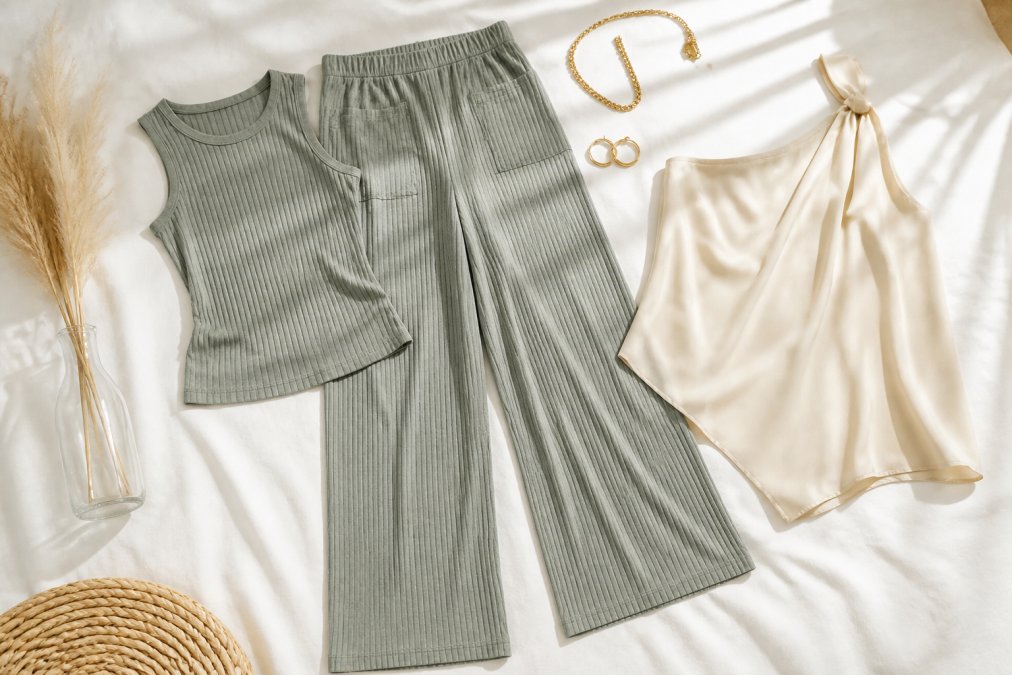
A practical 2026 starter capsule includes:
- Two neutral fitted tanks or layering tops
- One pair of well-fitting wide-leg or straight-leg trousers
- One versatile blouse (asymmetrical or draped neckline for visual interest)
- One structured layer (blazer, cardigan, or light jacket)
- One pair of dark wash or straight-cut jeans
- One simple dress that works day-to-night
- Two pairs of shoes: one casual, one polished
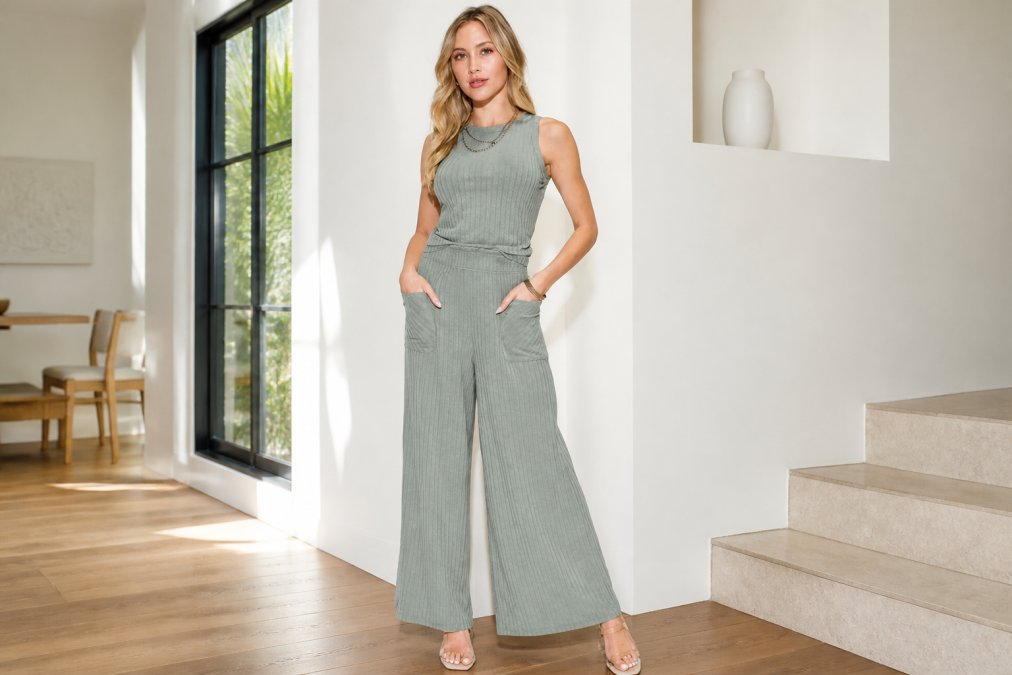
The Basic Bae Ribbed Tank and Wide Leg Pants Set from Jessiz Boutique is exactly the kind of piece a capsule wardrobe is built around. At $45, it covers two core categories at once and the ribbed fabric holds its shape across multiple wears.

Neutral Palette and Versatile Basics That Do the Heavy Lifting
A neutral palette means building your foundation in whites, creams, tans, grays, and blacks. These tones coordinate automatically, which is why they're the backbone of every high-end aesthetic. A neutral-based wardrobe of 15 pieces generates more outfit combinations than a colorful wardrobe of 30 pieces.
Cost-per-wear is the price of a garment divided by the number of times you wear it. A $90 trouser worn 60 times costs $1.50 per wear. A $20 fast-fashion trouser worn 4 times costs $5 per wear. Fit and fabric quality determine how many times you'll actually wear something.
When evaluating fabric quality on a budget, prioritize ribbed cotton blends that hold shape and resist pilling, woven fabrics with structure that drape well, and heavier weight knits that survive more wash cycles.
The Basic Bae Asymmetrical Neck Long Sleeve Top at $32 is a strong example of investment-piece thinking at an accessible price. The asymmetrical neckline adds visual interest that reads as intentional styling.

Styling Tricks to Look Expensive Without Spending More
The polished look most people associate with expensive clothing is rarely about the clothing itself. It's about fit, proportion, and the details most people overlook. A $30 top styled correctly will photograph more expensively than a $150 top worn without intention.
Outfit Formulas That Work Every Season
Outfit formulas are repeatable combinations that consistently produce a polished result. They remove daily decision fatigue and ensure you're always working with proportions that flatter.
Four formulas worth building around:
- Fitted top + wide-leg trouser + simple shoe: the proportion contrast creates a high-end silhouette at any price point
- Oversized layer + slim bottom + pointed flat: the volume-on-top, structure-on-bottom formula that works from fall through spring
- Monochrome neutral + one texture accent: wearing a single color head-to-toe with one textural variation reads as intentional and elevated
- Simple dress + structured layer: transforms a basic dress into a day-to-night styling option without buying a new outfit
These formulas apply across seasons. The pieces change; the structure stays the same.
Layering, Texture Mixing, and Proportion Play
Layering techniques create visual depth that signals intentional style. A ribbed tank under an open blouse, a fitted tee under a slip dress, a structured jacket over a casual set: these combinations work at any budget.
Texture mixing works on the same principle. Pairing a smooth woven pant with a ribbed knit top, or a matte jersey top with a slightly shiny straight skirt, adds dimension without adding cost.
Proportion play is the most underused tool in affordable fashion. If the top is oversized, the bottom should be fitted. If the bottom is wide, the top should be tucked or cropped.
How to Dress Stylishly on a Budget Using Color Theory
Color theory is one of the most underused tools in budget fashion, and it's completely free to apply. Understanding your personal color palette means every piece you buy works harder because it flatters your specific coloring.
Personal color palette refers to the tones that complement your skin undertone, eye color, and natural hair color. Warm undertones (yellow, peach, golden) are flattered by earth tones, warm whites, and rich jewel colors. Cool undertones (pink, blue, neutral) work best with true whites, cool grays, navy, and berry tones.
Before buying any new piece, check whether the color is in your personal palette. A $25 top in a color that genuinely flatters you will get worn constantly. A $25 top in a trendy color that doesn't suit you will sit unworn.
For building a neutral palette wardrobe, choose your neutrals based on your undertone:
- Warm undertones: camel, warm beige, cream, chocolate brown, olive
- Cool undertones: true white, charcoal, cool gray, navy, soft blush
According to the Sustainable Apparel Coalition's guidelines on conscious consumption, clothing that gets worn more frequently per item is the single most effective way to reduce the environmental impact of your wardrobe. Color compatibility directly drives wear frequency.
Best Online Stores for Unique Fashion: What to Look For
Finding the best online stores for unique fashion on a budget requires a different evaluation checklist than shopping in person. You can't feel the fabric or check the fit before buying, which means the store itself needs to do more work for you.
What actually separates a reliable budget fashion retailer from a frustrating one:
- Detailed size guides with actual measurements: not just S/M/L, but centimeter or inch measurements per size
- Multiple product photos including on-model shots: you need to see how the fabric drapes and moves
- Curated collections rather than mass-catalog listings: boutiques that select pieces intentionally tend to have more cohesive styling and better quality control
- Clear return policies: a store confident in its product quality will make returns straightforward
- Transparent fabric content: listed on every product page
The best online stores for unique fashion also tend to carry pieces with design details that differentiate them from generic basics. An asymmetrical neckline, an interesting sleeve shape, a thoughtful cut: these details make affordable pieces look intentional rather than generic.
As noted by the Federal Trade Commission's guidance on online shopping, consumers shopping online have clear rights around accurate product representation and return processes.
The Basic Bae Batwing Sleeve Blouse at $30 is a good example of what to look for: a design detail (batwing sleeves) that elevates a simple silhouette, in a lightweight fabric that layers well.

Clothing Maintenance: The Budget Hack Nobody Talks About
Clothing maintenance is the most overlooked budget strategy in fashion. Buying well matters. Keeping what you bought looking good is what actually protects the investment.
Most wardrobe degradation happens in the wash. Heat breaks down elastic, shrinks natural fibers, and accelerates pilling in knits. Cold water washing and air drying extends the life of most garments significantly.
A practical maintenance checklist:
- Wash knits and ribbed pieces inside-out on a gentle cycle
- Air dry any item you want to keep its shape
- Use a fabric shaver on pilling knits every 3-4 wears
- Hang structured pieces (blazers, trousers) rather than folding
- Spot-clean when possible instead of full washing
- Store seasonal pieces folded in breathable bags, not plastic
The second overlooked maintenance tool is tailoring. A $15 hem on a $30 trouser transforms the garment entirely. Fit is the single biggest visual signal of quality. A $30 trouser plus a $15 hem worn 50 times costs $0.90 per wear.
According to the American Cleaning Institute's fabric care guidelines, following garment care labels precisely can more than double the usable life of most clothing items.
Build Your 2026 Budget Style Plan Step by Step
Knowing how to dress stylishly on a budget 2026 is one thing. Having a repeatable system is what makes it sustainable.
| Step | Action | Frequency |
|---|---|---|
| 1. Wardrobe Audit | Review all pieces, identify gaps vs. redundancies | Once per season |
| 2. Gap List | Write a specific shopping list based on audit findings | After each audit |
| 3. Color Check | Confirm new pieces fit your personal palette | Before every purchase |
| 4. Cost-Per-Wear Filter | Reject any item below your minimum wear threshold | Before every purchase |
| 5. Fit Check | Try proportions before committing; plan tailoring if needed | At purchase |
| 6. Outfit Formula Test | Build 3 outfits from any new piece before buying | At purchase |
| 7. Maintenance Routine | Wash, air dry, and store correctly | After every wear |
| 8. Seasonal Review | Re-audit and update gap list | Every 3 months |
Step 1: Audit first, buy second. The audit is not optional. Smart shopping starts with knowing what you have.
Step 2: Build your gap list. Only items on the gap list are approved purchases. This is your budget management tool.
Step 3: Apply color theory. Check every potential purchase against your personal palette before buying.
Step 4: Run the cost-per-wear filter. Set a maximum cost-per-wear threshold (many people use $2-3 per wear as a guide). Any item that won't realistically reach that threshold doesn't make the cut.
Step 5: Prioritize fit. If it doesn't fit off the rack, factor in tailoring costs. If the total still clears your cost-per-wear threshold, buy it. If not, pass.
Step 6: Test outfit formulas. Before purchasing any new piece, mentally build at least three outfits from your existing wardrobe. If you can't build three, it's not versatile enough for a budget wardrobe.
Step 7: Maintain what you own. Follow the maintenance checklist above. Clothing care is the cheapest form of smart shopping.
Step 8: Review seasonally. A quarterly audit keeps your wardrobe aligned with your actual lifestyle.
Building a stylish wardrobe on a budget isn't complicated, but it does require a system most people don't have. The gap between looking polished and looking thrown-together is almost never about spending more. It's about buying with intention, understanding fit and proportion, and maintaining what you own. Jessiz Boutique offers curated, affordable pieces designed to work within exactly this kind of system, from versatile ribbed sets to statement tops with design details that elevate simple outfits. Shop now and start building a wardrobe that works harder for every dollar you spend.
Frequently Asked Questions
What are the essential wardrobe staples for 2026?
The most versatile wardrobe staples for 2026 include a ribbed tank or fitted top, wide-leg or tailored trousers, a neutral-toned blouse, a structured outer layer, and one statement accessory. These pieces form the backbone of a capsule wardrobe because they mix and match across dozens of outfits. Sticking to a neutral palette, think ivory, black, camel, and slate, means every piece works with everything else you own, which stretches your budget further.
How can I dress classy and elegant on a budget?
Focus on fit first. A $30 blouse that fits perfectly looks more expensive than a $90 one that doesn't. Choose fabrics that hold their shape, ribbed knits and woven materials photograph and wear better than thin synthetics. Keep accessories minimal and intentional. Prioritize cost-per-wear over sticker price: a $45 set you wear 30 times costs less per wear than a $15 top you wear twice. Clothing maintenance, like proper washing and storage, also keeps affordable pieces looking polished longer.
Are boutique brands more affordable than fast fashion?
Boutique brands often offer better value than fast fashion when you factor in style longevity and fabric quality. Fast fashion prices look low upfront, but pieces frequently wear out or go out of style within a season. Curated boutiques tend to select pieces with stronger silhouettes and more durable construction, so you replace them less often. Many boutique pieces also feel more distinct and less generic than mass-market options, which matters if you want a wardrobe that actually reflects your personal style.
How can I mix and match clothes to create more outfits?
Start by building around a neutral palette so every piece pairs naturally with others. Then apply outfit formulas: a fitted top plus wide-leg pants plus one accessory covers casual and smart-casual occasions. Swap the top for a blouse and add a structured layer for an elevated look. Texture mixing, pairing a ribbed knit with a woven trouser, for example, adds visual interest without adding cost. Aim for a wardrobe where at least 80% of pieces work with at least three other items you already own.
This article was written using GrandRanker