

Where to Buy Quality Affordable Swimwear in 2026
Table of Contents
- Best Affordable Swimsuit Brands and Where to Shop
- How to Identify Quality Swimwear Fabrics
- Swimwear Fit Guide for Women
- How to Care for Swimwear to Make It Last
- Sustainable and Eco-Friendly Swim Options
- Budget-Friendly Shopping Tips for Swimwear
- Conclusion
Last Updated: August 22, 2026
Best Affordable Swimsuit Brands and Where to Shop
Finding quality affordable swimwear doesn't mean settling for pieces that fall apart after a season. Budget no longer equals disposable, retailers now compete on fabric durability, stitching integrity, and shape retention. At Jessiz Boutique, we've curated swimwear that balances cost-per-wear with genuine construction quality.
Jessiz Boutique: Curated Styles at Competitive Prices
Jessiz Boutique stands out because every piece is vetted for construction and fabric composition. Their one-piece and bikini selections range from $32 to $48, with standout options like the Embroidered V-Neck One-Piece Swimwear at $40. This piece combines 85% polyester and 15% elastane, delivering the four-way stretch most swimmers demand without premium brand markup. The embroidered detail is stitched, not glued, a common trap in budget swimwear.

The Women's Two Piece High Waisted Bikini Sets Tummy Control Swimsuits at $36 include a mesh sarong wrap. The 82% polyester, 18% elastane blend maintains elasticity through repeated chlorine exposure, and the high-waisted cut addresses full coverage concerns. The Davi & Dani Halter Skirt Bikini Swim Set at $48 features metallic accents and removable padding that justifies the investment for resort wear.
One-Piece vs. Bikini Styles: What Fits Your Budget
One-piece suits typically cost 10-15% more than bikini sets at similar quality levels, but concentrate stress on fewer seams, meaning less wear at connection points. For regular swimmers planning multiple seasons, the one-piece upfront cost often pays dividends.
Bikini sets offer flexibility, replace just the top or bottom if one wears faster. The high-waisted bikini trend has democratized coverage options. For budget-conscious swimmers who rotate through multiple pieces, a $36 bikini lasting two seasons with the option to replace just the bottom in year three delivers better value than a $50 one-piece worn out completely.
The choice depends on usage. Daily swimmers in chlorine-heavy environments should lean toward one-pieces. Occasional swimmers and resort-wear seekers get more flexibility from bikini sets.
How to Identify Quality Swimwear Fabrics
Cheap swimwear fails predictably: elastic gives out, colors fade, stitching unravels at stress points. Quality fabrics resist all three.
Fabric Composition and Durability Standards
The best affordable swimwear uses 80-85% polyester with 15-20% elastane (spandex) (peer-reviewed research). Polyester resists chlorine better than nylon, maintains color vibrancy longer, and doesn't absorb excess water. Look for this ratio on product descriptions, if a suit claims to be "stretchy" without listing elastane content, it's cutting corners.
Nylon blends are cheaper to produce but fade faster and absorb chlorine odors. The thickness of the knit matters as much as fiber composition. Quality swimwear has a smooth, uniform texture without visible gaps. Budget suits often use thinner knits, becoming translucent or developing pilling after 10-15 wears.
Stitching Quality and Hardware Durability
Seam construction determines longevity. Quality suits use flatlock stitching or double-stitched seams at stress points, arm holes, leg openings, waistbands. This distributes tension across multiple thread lines rather than concentrating it on a single seam.
Hardware should be metal or reinforced plastic, never thin plastic that cracks after a season. The Davi & Dani Halter Skirt Bikini uses metal hardware on tie closures, resisting corrosion and maintaining adjustability longer than plastic alternatives.

Removable padding is superior to glued padding because it can be replaced if it deteriorates. Non-underwire construction is standard in affordable swimwear and actually performs better than underwire in chlorinated water, the wire corrodes and loses shape over time.
| Fabric Feature | Quality Indicator | Red Flag |
|---|---|---|
| Fiber Composition | 80-85% polyester, 15-20% elastane | Nylon-dominant blends or missing elastane % |
| Knit Density | Smooth, uniform texture without visible gaps | Loose weave or transparent fabric |
| Seam Construction | Flatlock or double-stitched at stress points | Single-line stitching visible in photos |
| Hardware | Metal or reinforced plastic | Thin plastic clips or rings |
| Padding | Removable, can be replaced | Glued padding that deteriorates |
| Care Instructions | Hand-wash recommended for longevity | Machine-wash only (indicates cheap construction) |
Swimwear Fit Guide for Women
Sizing inconsistency across retailers is the main reason people return swimwear. The solution is understanding how swimwear sizing works and what measurements matter most.
Sizing Across Different Styles
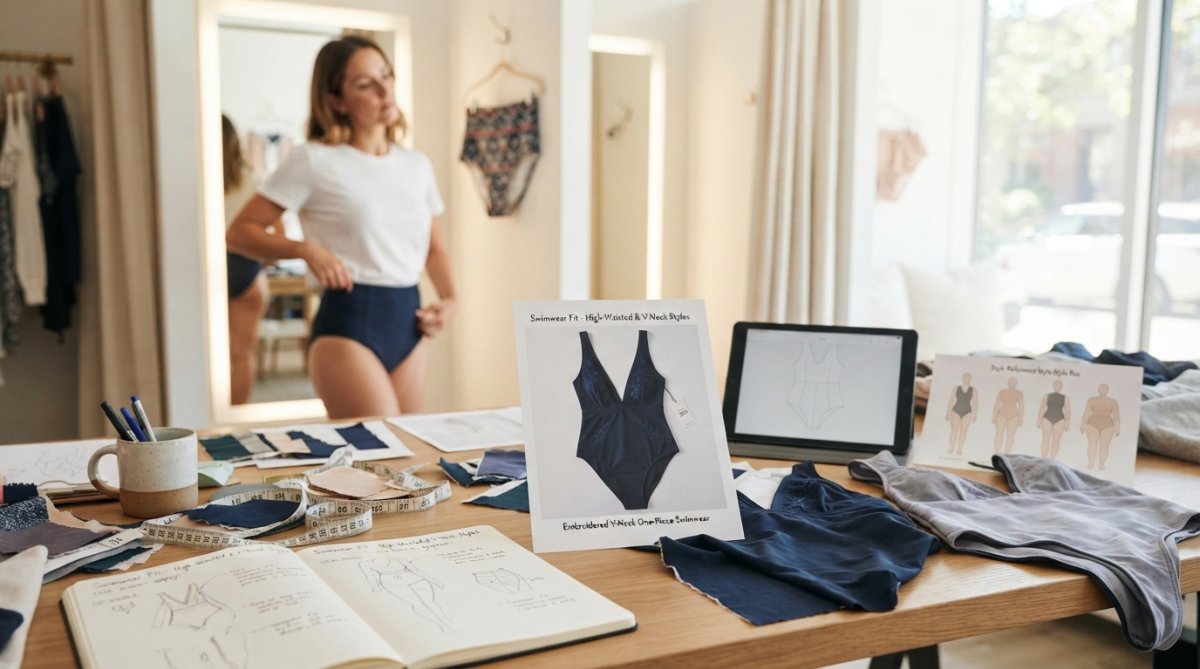
One-piece suits size differently than bikinis. A one-piece needs to fit snugly at chest, waist, and hip simultaneously. Bikini tops size like bra tops, while bikini bottoms size like underwear. You might wear a medium top and large bottom in a bikini set, but a medium one-piece.
Jessiz Boutique provides detailed size charts for each piece. The Embroidered V-Neck One-Piece lists bust, waist, and hip measurements for each size, allowing direct comparison with your own measurements.
High-waisted bikini bottoms sit 2-3 inches above the hip bone, meaning a high-waisted bottom in your usual size often fits looser at the hip than expected. The Women's Two Piece High Waisted Bikini Sets account for this in their sizing.

Removable padding changes how you should size. If a suit has removable pads, you can adjust fit by removing them if the suit runs large, or adding padding if it runs small.
Body Type Considerations
Different body types benefit from different styles based on actual garment construction and physics.
Pear-shaped bodies (narrower shoulders, fuller hips and thighs) should look for high-waisted bottoms with adjustable side ties. The tie-side feature lets you customize coverage around the hip.
Apple-shaped bodies (fuller midsection, narrower hips and thighs) benefit from one-piece suits with ruching or strategic cutouts that create visual interest without clinging to the midsection.
Hourglass-shaped bodies can wear almost any style but should prioritize suits with balanced support at chest and hip. Bikini sets offer the most flexibility here.
Athletic builds benefit from suits with visual interest, ruffles, cutouts, patterns, or color blocking add dimension that flatters straighter body lines.
Body type determines which styles make you feel most confident and perform best functionally, not what you "should" wear.
How to Care for Swimwear to Make It Last
Most swimmers ruin their swimwear in the first 10 wears through improper care. The difference between a suit lasting one season and three seasons is almost entirely about post-swim care.
Washing and Drying Best Practices
Rinse immediately after swimming. Chlorine and salt water continue damaging fabric fibers even after you leave the pool. A 30-second cold-water rinse removes 80% of the chlorine that would otherwise set into the fabric (the CDC).
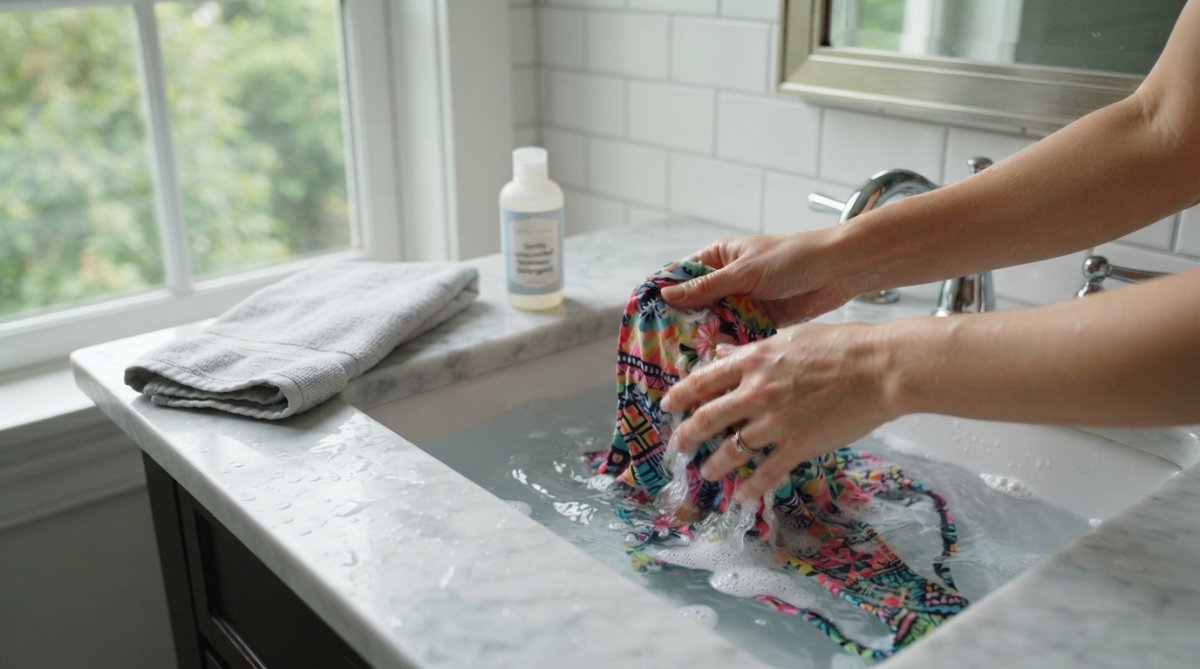
Hand-wash in cool water with mild detergent designed for swimwear or delicates. Regular laundry detergent is too harsh and breaks down elastane fibers. Cool water (below 70 degrees) is the standard across all manufacturers (the FTC). Soak the suit for 5-10 minutes in cool water with detergent, then gently squeeze the soapy water through the fabric. Don't scrub or wring.
Rinse thoroughly until the water runs clear. Detergent residue attracts chlorine and salt, making incomplete rinsing counterproductive. Three separate rinses in cool water is the minimum.
Never tumble-dry unless the care label explicitly permits it. Most swimwear should air-dry flat or hanging. Lay the suit flat on a clean towel or hang it in the shade. Direct sunlight fades colors and degrades fabric. Air-drying takes 24-48 hours, which is why having multiple suits in rotation matters.
Storage and Off-Season Care
Store swimwear in a cool, dry place away from direct sunlight. A dark drawer or closet is ideal. Sunlight causes gradual color fading and degrades elastane fibers even when the suit isn't being worn.
Never store wet or damp swimwear. Moisture creates mold and mildew, causing permanent staining and odor. Make sure suits are completely dry before putting them away, typically 48 hours of air-drying.
Chlorine smell that persists after washing indicates chlorine has bonded with the fabric. Soak the suit in cool water with a small amount of white vinegar (1 part vinegar to 10 parts water) for 30 minutes, then rinse thoroughly. The vinegar breaks down the chlorine bond without damaging the fabric.
Elastane naturally loses elasticity over time, but proper care slows this dramatically. A suit cared for properly maintains 80-90% of its elasticity after 50 wears. The same suit with improper care loses 50% elasticity after 15-20 wears.
For long-term storage, fold the suit loosely and store it in a breathable container rather than plastic. Breathable fabric bags or cotton storage boxes are ideal. Check on the suit every 2-3 months to ensure no moisture has accumulated.
Sustainable and Eco-Friendly Swim Options
The swimwear industry has shifted toward recycled materials and sustainable manufacturing, but sustainability claims vary widely. For affordable swimwear, the sustainability sweet spot is recycled polyester blended with elastane, delivering performance equivalent to virgin polyester while reducing manufacturing waste.
Sustainable production practices matter as much as material composition. Retailers providing transparency about ethical manufacturing, water usage, and chemical treatment standards are worth supporting.
The most sustainable swimwear choice is buying quality pieces that last multiple seasons rather than cheap suits replaced annually. A $40 suit worn for three seasons has lower environmental impact than three $15 suits worn for one season each. Durability is the greenest option.
Budget-Friendly Shopping Tips for Swimwear
Smart shopping for affordable swimwear means maximizing value and minimizing returns.
Cost-Per-Wear Strategy
Calculate cost-per-wear to make smarter purchasing decisions. A $40 suit worn 20 times costs $2 per wear. A $20 suit worn 5 times costs $4 per wear. The cheaper suit actually costs more when you factor in durability.
Rotate through 2-3 suits if you swim regularly. This extends the lifespan of each individual suit by distributing wear. A suit worn 10 times per season with 2-3 days drying time between wears lasts significantly longer than a single suit worn 20+ times.
Jessiz Boutique's price range ($32-$48) sits in the sweet spot for cost-per-wear calculations. Buying three suits at $36-$40 each ($108-$120 total) and rotating through them delivers better value than buying one $50 suit from a premium brand.
Seasonal Discounts and Return Policies
Swimwear pricing follows predictable seasonal patterns. Peak season (April-June) has the highest prices and best selection. Off-season (September-February) offers significant discounts, sometimes 30-40% off retail. Buying next season's swimwear during off-season sales dramatically reduces cost.
Return policies matter more for online swimwear shopping because fit is impossible to predict perfectly. A retailer offering 30-day returns with free return shipping reduces the risk of ordering the wrong size significantly.
Check for first-time buyer discounts. Many retailers offer 15-20% off for new customers, which can be combined with seasonal sales. Signing up for email lists often triggers a discount code within 24 hours.
Compare total cost including shipping. A suit that's $5 cheaper but costs $8 to ship is actually more expensive. Retailers offering free shipping above a minimum purchase ($50-$75 typically) reward buying multiple pieces.
Finding quality affordable swimwear means understanding that price and quality aren't inversely correlated. Jessiz Boutique demonstrates this by curating pieces that deliver genuine construction quality at accessible prices. The Embroidered V-Neck One-Piece at $40, the Women's Two Piece High Waisted Bikini Sets at $36, and the Davi & Dani collection all prioritize fabric composition, stitching quality, and shape retention.
The real cost of swimwear is cost-per-wear over the suit's lifespan. A $40 suit lasting three seasons costs $0.67 per wear (assuming 20 wears per season). A $20 suit lasting one season costs $1 per wear. Jessiz Boutique's curated selection and transparent fabric specifications let you make this calculation confidently before purchasing. Shop now and invest in pieces that deliver both style and durability.
Frequently Asked Questions
Q: What should I look for when buying quality affordable swimwear?
A: Focus on fabric composition (look for polyester-elastane blends), stitching quality, and elasticity. Check if the material resists chlorine and maintains shape after multiple wears. Read product descriptions for specific fabric percentages, higher elastane content (15-18%) improves longevity. Examine seams for tight, even stitching and test the fabric's stretch recovery by pulling gently and releasing.
Q: How do I choose the right swimsuit for my body type using a swimwear fit guide for women?
A: One-piece suits with cutouts or ruching can provide visual interest. High-waisted bikinis offer flattering coverage. Halter-neck styles can create definition. For athletic builds, ruffles and embellishments can add dimension. Always check size charts against your actual bust, waist, and hip measurements rather than relying on standard sizing, as fit varies significantly between styles.
Q: What's the best way to care for swimwear to make it last longer?
A: Hand wash in cool water immediately after swimming to remove chlorine, salt, and sunscreen. Use mild detergent and avoid fabric softener. Machine wash on gentle cycle if needed, but never use hot water. Lay flat to dry or hang in shade, tumble drying can damage elastane. Store in a cool, dry place away from direct sunlight. Rotate between multiple suits to extend lifespan by reducing wear frequency.
Q: Is it worth spending more on swimwear, or can affordable options last just as long?
A: Affordable swimwear can last years if you choose pieces with quality fabric composition and proper care. The difference often isn't price but material quality and construction. A $40 suit made from 85% polyester, 15% elastane with tight stitching can be a durable option. Calculate cost-per-wear: if you wear an affordable suit 20+ times per season, the investment can pay off quickly compared to replacing cheap suits annually.
Q: Where can I find affordable swimwear that actually maintains its shape and color?
A: Shop retailers offering detailed fabric specifications and customer reviews mentioning durability. Jessiz Boutique provides swimwear ranging from $32-$48 with material breakdowns and sizing guides. Look for suits made with polyester-elastane blends and chlorine-resistant properties. Check return policies to test fit and quality before committing, and prioritize brands transparent about fabric composition and care instructions.
This article was written using GrandRanker