

Best Affordable Boutique Clothing Alternatives for 2026
Table of Contents
- Why Affordable Boutique Clothing Beats Fast Fashion
- Best Online Stores for Unique Fashion: What to Look For
-
Our Affordable Boutique Denim Lineup: Prices and Details
- The Camden Vintage-Wash Baggy Jeans
- High Waist Cargo Skinny Zipper Ankle Jeans
- Lovervet Hayden High Rise Skinny
- Judy Blue High Waist Distressed Slim Jeans
- Kancan Plus High-Rise Button Fly Ankle Skinny
- RISEN High Waist Distressed Cropped Bootcut Jeans
- Kancan Distressed Cat's Whiskers Button Fly Jeans
- RISEN High Waist Distressed Cropped Jeans
- Judy Blue High Waist Distressed Straight Jeans
- Judy Blue Garment Dyed Tummy Control Skinny Jeans
- How to Spot High-Quality Fabrics on a Budget
- Tips for Shopping Online Boutiques: Sizing, Returns, and Reviews
- How to Style Boutique Clothes for Any Occasion
- Frequently Asked Questions
Last Updated: September 13, 2026
Why Affordable Boutique Clothing Beats Fast Fashion
Affordable boutique clothing is a curated, small-batch alternative to mass-produced fast fashion, built around better fabrics, smaller runs, and styles that do not appear on every second person you pass. At Jessiz Boutique, we see shoppers moving away from disposable trend pieces toward denim and staples they can wear for years. A pair of jeans worn twice a week for two years costs far less per wear than a cheap pair that loses its shape in a season (the EPA).
Fast fashion wins on price at checkout and loses everywhere else. Thin cotton blends pill after a few washes, seams pull, and sizing shifts between batches because the same pattern gets cut in different factories. Boutique retailers work in smaller quantities, which means more attention per garment and less incentive to cut corners on garment construction standards and labeling.
The trade-off is real: boutiques carry fewer sizes per style and restock slowly, endless inventory traded for better inventory.
Best Online Stores for Unique Fashion: What to Look For
The best online stores for unique fashion share four traits: transparent fabric composition, published measurements, honest photography, and a return policy you can read in under a minute. Run this checklist before buying from any boutique, including ours:
- Fabric composition listed by percentage. "Cotton blend" tells you nothing. "93% cotton, 5% polyester, 2% spandex" tells you exactly how it will stretch, breathe, and wash.
- Measurements, not just sizes. A chart with waist, hip, rise, and inseam in inches beats a generic S/M/L grid.
- Photos on more than one body type. If every model is the same height and build, the fit information is incomplete.
- A stated return window and who pays return shipping. Vague language here usually means a painful process later.
- Reviews that mention fit specifically. "Runs small in the waist" beats fifty five-star ratings with no detail.
Our Affordable Boutique Denim Lineup: Prices and Details
Every pair below is in stock at Jessiz Boutique, priced between $38 and $75, built from denim with a stated fiber blend. Sizing runs from size 0 through 3XL depending on the style.
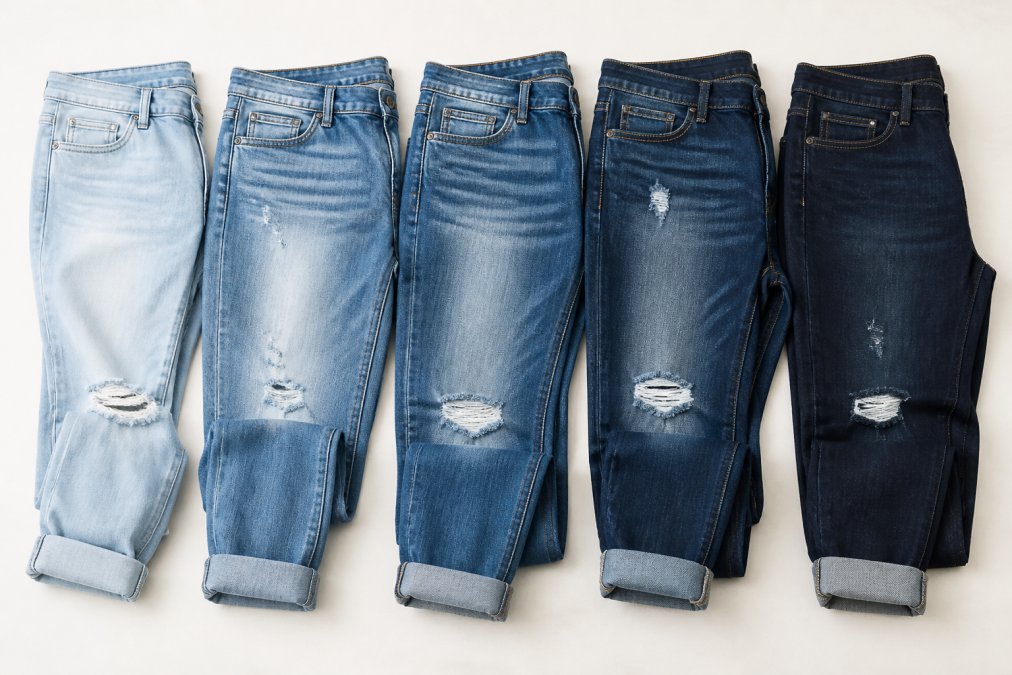
The Camden Vintage-Wash Baggy Jeans
The relaxed pick, and the cheapest at $38.00. A vintage-inspired faded wash, distressed detailing, and a roomy straight wide-leg cut that reads streetwear rather than polished. Sizes S through 3XL. Best for anyone who wants denim that does not cling.
High Waist Cargo Skinny Zipper Ankle Jeans
$45.00, true to size, in a 75% cotton and 25% polyester blend. Functional cargo pockets and zipper accents give it a sharper edge than a plain skinny.
Lovervet Hayden High Rise Skinny
$58.00 with a full size run from 24 to 22W. Cat's whisker fading and destroyed knees, in a 90% cotton, 8% polyester, 2% spandex blend with moderate stretch.
Judy Blue High Waist Distressed Slim Jeans
$74.00, 91% cotton with slight stretch, in a wide size range from 0 through 24W. Distressed detailing and a slim leg that sits between a skinny and a straight.
Kancan Plus High-Rise Button Fly Ankle Skinny
$58.00 in a medium stone wash, built for curves with a high rise and a fitted ankle-length leg. A 94% cotton, 4% polyester, 2% spandex blend. Available in XL through 3XL.
RISEN High Waist Distressed Cropped Bootcut Jeans
$66.00, 95% cotton with 3.5% rayon and 1.5% spandex, moderate stretch, raw hem. The cropped bootcut balances wider hips.
Kancan Distressed Cat's Whiskers Button Fly Jeans
$60.00 and the stretchiest pair here at 68% cotton and 30% polyester. Distressed detailing, button fly, and a 26.5-inch inseam that lands at the ankle. A relaxed weekend pair.
RISEN High Waist Distressed Cropped Jeans
$75.00, 94.5% cotton, moderate stretch, raw hem, and the broadest size run here: size 0 through 3X.
Judy Blue High Waist Distressed Straight Jeans
$72.00, 93% cotton, slightly stretchy, with a 31-inch inseam, the longest pair in the lineup. A true straight leg. Sizes 0 through 24W.
Judy Blue Garment Dyed Tummy Control Skinny Jeans
$68.00, 93% cotton and 6% polyester, with a high-rise tummy control panel and a garment-dyed finish that holds color better than surface-dyed denim. Sizes 0 through 24W.
| Style | Price | Fiber Blend | Best For |
|---|---|---|---|
| The Camden Vintage-Wash Baggy | $38.00 | Cotton blend, relaxed | Streetwear, roomy fit |
| High Waist Cargo Skinny Zipper | $45.00 | 75% cotton, 25% polyester | Day-to-night, true to size |
| Lovervet Hayden High Rise Skinny | $58.00 | 90% cotton, 8% poly, 2% spandex | Full size run, stretch |
| Judy Blue Distressed Slim | $74.00 | 91% cotton, 7% poly, 2% spandex | Extended sizes to 24W |
| Kancan Plus Button Fly Ankle | $58.00 | 94% cotton, 4% poly, 2% spandex | Plus fit, non-sheer |
| RISEN Distressed Cropped Bootcut | $66.00 | 95% cotton, 3.5% rayon | Balancing wider hips |
| Kancan Cat's Whiskers Button Fly | $60.00 | 68% cotton, 30% polyester | Maximum stretch |
| RISEN High Waist Distressed Cropped | $75.00 | 94.5% cotton, 4% poly | Sizes 0 to 3X |
| Judy Blue Distressed Straight | $72.00 | 93% cotton, 5% poly, 2% spandex | Long inseam, 31 in |
| Judy Blue Tummy Control Skinny | $68.00 | 93% cotton, 6% polyester | Smooth silhouette |
How to Spot High-Quality Fabrics on a Budget
High-quality fabric on a budget comes down to reading the label before the price tag, then doing one piece of math most shoppers skip. Natural fibers like cotton, linen, and wool cost more to produce, so a garment that is 90% or more cotton at a low price usually means the brand saved on trim, hardware, or packaging rather than the cloth itself (fabriclink.com).
Read the fiber, then predict the behavior
Fiber composition is a forecast. Here is how the common fibers behave:
- Cotton breathes, holds shape, and fades naturally.
- Polyester adds durability and wrinkle resistance but traps heat and pills when it dominates a blend.
- Rayon and viscose drape beautifully and feel cool,
- Spandex or elastane at 1 to 3% gives comfortable stretch with recovery.
- Linen is the strongest natural fiber and gets softer with every wash, but wrinkles by design, the trade-off, not a defect.
What to look for, in order of importance:
- Cotton content above 90% for denim and structured pieces. It breathes, holds shape, and ages well.
- A small percentage of spandex or elastane, typically 1 to 3%, enough for comfort without the sag of higher synthetic loads.
- Weight, when listed. Denim in the 12-ounce range is substantial; under 10 ounces feels flimsy.
- Stated care instructions. "Machine wash cold, tumble dry low" signals a brand that expects the garment to last.
Synthetic materials are not automatically bad. A 30% polyester blend makes jeans stretchier and cheaper to produce, which is why it shows up in budget denim. The problem is when polyester replaces cotton entirely while the price stays the same.
The cost-per-wear math that changes the decision
Fabric quality shows up in your cost per wear. Divide the price by the number of times you realistically wear the item. A $75 pair of 94.5% cotton jeans worn twice a week for two years works out to roughly 72 cents per wear. A $25 pair that loses its shape after a season lands closer to a dollar per wear, and you still have to replace it. The cheaper garment cost more. The right question is never "what is the lowest price?" but "what is the lowest price per wear?"
Where the best fabric value actually hides
The strongest fabric-per-dollar value is often not new retail at all. Resale and consignment shops routinely carry garments whose original construction, heavier cotton, real wool, lined seams, would cost two to three times as much new. Because the item is already worn, you can inspect the fabric in person, check for pilling at the underarms and inner thighs, and see how the seams held up, quality verification no product photo can give you. A practical routine: check the fiber label first, feel the weight and drape second, inspect the high-stress seams third, and run the cost-per-wear math last.
A "cotton blend" label with no percentages is the single biggest red flag in budget fashion. It almost always means the synthetic content is high enough that the brand would rather not print it.
Before buying, search the product page for the words "fabric weight" or "GSM" (grams per square meter). Brands confident in their cloth usually publish it; brands cutting corners usually do not.
Fiber percentage predicts how a garment behaves, and cost per wear predicts whether it was actually a bargain. Judge both before you judge the price tag.
Tips for Shopping Online Boutiques: Sizing, Returns, and Reviews
Tips for shopping online boutiques start with one habit: measure yourself once, write the numbers down, and compare them against the product's own chart rather than your usual size. Sizing is not standardized across brands, and a size 8 in one label can be a 10 in another. Everything below is built to cut returns, where online boutique shopping actually gets expensive.
Measure once, then trust the chart over the size tag
Take a soft tape and record four numbers: your natural waist (narrowest point, usually just above the navel), your hip (fullest point), your inseam (crotch seam to where you want the hem to land), and your rise preference. Keep them in a note on your phone. From then on, ignore the S/M/L grid and match your numbers to the product's own measurement table. Two details separate a serious size chart from a decorative one:
- Measurements per size, not per category. A chart listing waist, hip, rise, and inseam for each size tells you how the garment is graded. "S = 26-28" tells you almost nothing.
- Re-engineered plus sizing, not just scaled up. The best plus-size patterns adjust rise and inseam for larger frames rather than widening a straight-size pattern. If a brand's 1X and 3X share the same rise and inseam as its small sizes, the fit was not designed for those bodies.
Read the return policy like a contract
Before you buy, find the return window, the condition requirements, and who pays return shipping. Those three facts determine your real risk. Check these specifics every time:
- The exact window, counted from delivery or order date, the difference can be a week.
- Whether sale or clearance items are final sale. Many boutiques exclude discounted pieces, turning a bargain into a gamble.
- Whether you get a refund or store credit. Credit keeps your money with the brand; a refund returns it to you.
- Whether return shipping is prepaid or deducted. A "free returns" claim that subtracts a label fee is not free.
Verify fit with reviews and real measurements
Filter reviews for your height and usual size rather than reading top-to-bottom. "I am 5'4" and the 28-inch inseam hit right at my ankle" is worth more than fifty five-star ratings with no detail. Look for mentions of whether the item runs small or large in the waist, whether the fabric is sheer, and whether the color matched the photos. Our product pages list full measurements per size, from waist and hip to rise and inseam, so you can compare directly rather than guessing. When a boutique publishes per-size measurements and a clear return policy, you can shop with the confidence of a fitting room.
Order your true size and one size up on any style you are unsure about, then return the one that does not fit.
Measure once, match the per-size chart, and read the return policy before checkout. Those three habits turn online boutique shopping from a gamble into a controlled decision.
How to Style Boutique Clothes for Any Occasion
Styling boutique clothes for any occasion is mostly about building around two or three anchor pieces instead of buying a new outfit per event. A capsule wardrobe works because boutique pieces are more distinctive, so fewer go further. Three combinations cover most situations:
- Weekend and errands: The Camden Vintage-Wash Baggy Jeans with a fitted tee and sneakers. The roomy cut does the work, so the top stays simple.
- Dinner or a night out: Judy Blue High Waist Distressed Straight Jeans with a tucked-in blouse and heels. The 31-inch inseam and straight leg read dressier.
- Work or travel: Judy Blue Garment Dyed Tummy Control Skinny Jeans with a cropped sweater and a structured jacket. The garment-dyed finish holds color through repeated washing.
For sizing confidence, the Kancan Plus High-Rise Button Fly Ankle Skinny runs XL through 3XL in a non-sheer 12.3-ounce fabric, and the RISEN High Waist Distressed Cropped Jeans covers size 0 through 3X with a properly scaled inseam.

Frequently Asked Questions
What is the 3-3-3 rule for clothes?
The 3-3-3 rule is a packing guideline that suggests bringing three tops, three bottoms, and three pairs of shoes for a trip. This creates nine outfit combinations from just nine items, making it a smart way to build a travel capsule wardrobe. When choosing pieces, prioritize versatile denim like high-waist skinnies or bootcut jeans that can be dressed up or down. This approach helps you pack light without sacrificing style, and it works well with affordable boutique clothing that mixes and matches easily.
Where can I buy cheap but high quality clothes?
Look for online boutiques that provide detailed fabric composition, size charts, and real customer reviews. For example, our denim lineup includes jeans priced between $38 and $75. These pieces offer durability and comfort without a high price tag. Focus on stores that show actual product photos and offer easy returns, so you can try before committing. Always check the return policy and shipping reliability before ordering.
How do I spot quality when shopping at online boutiques?
Start by reading the fabric composition. Natural fibers often indicate better breathability and stretch. Check for details like reinforced stitching, functional pockets, and quality hardware. Our jeans list exact materials and measurements, such as the Judy Blue High Waist Distressed Slim Jeans with 91% cotton. Also, look for customer reviews that mention fit and durability. A boutique that provides transparent sizing and care instructions is more likely to deliver a satisfying shopping experience.
What are some affordable alternatives to popular fast-fashion retailers?
Instead of mass-produced fast fashion, consider curated online boutiques that focus on quality and style. Our collection features denim from brands like Judy Blue, RISEN, and Kancan, with prices from $38 to $75. These jeans are designed to last longer and fit better than typical fast-fashion options. By shopping with a boutique, you often get more unique pieces and better customer service.
Building a wardrobe that lasts without overspending means choosing fabric quality over volume, measuring instead of guessing, and buying from retailers who publish the details that matter. Jessiz Boutique curates trendy, affordable apparel for women and men, with full measurement charts on every denim style, plus dresses, swimwear, activewear, and everyday essentials in the same collection. Shop now at Jessiz Boutique and build a rotation you will still be wearing next season.