

How to Return Online Fashion Orders: Step-by-Step Guide
Table of Contents
- How to Return Online Fashion Orders: Step 1, Check the Return Policy
- How to Repackage Clothes for Return
- How to Get a Shipping Label and Return Authorization
- How Long Do Online Returns Take to Process?
- In-Person vs. Mail-In Returns: Which Is Easier?
- Damaged or Defective Items: How to Get a Full Refund
- Tips for Buying Trendy Clothes Online (So You Return Less)
- Frequently Asked Questions
Last Updated: September 12, 2026
How to Return Online Fashion Orders: Step 1, Check the Return Policy
The first step in any return is confirming the seller's specific rules before you touch the box. A return policy is the seller's written terms covering how long you have to send an item back, what condition it must be in, and who pays for shipping. Most return windows run somewhere between 14 and 30 days from delivery, though this varies widely by retailer, so check the policy page on the order confirmation email rather than assuming (the FTC).
At Jessiz Boutique, we offer a curated selection of trendy and stylish fashion apparel designed to empower women and men alike. We are dedicated to providing high-quality, affordable fashion that allows you to express your unique taste and confidence. This guide walks through every stage of returning online fashion orders: reading the fine print, repacking, printing labels, and getting your money back without a fight. Below, we'll show you exactly how to return online fashion orders without losing track of deadlines or eating surprise fees.
Here's what most guides skip: the clock usually starts at delivery, not purchase. Miss that distinction and a 30-day window can shrink to 20 days before you've even opened the package.
How to Repackage Clothes for Return
Repackaging is where returns quietly succeed or fail. A packing slip is the document inside your original box listing the items and order number, and it is often the fastest way to prove what you're sending back. Fold garments as neatly as they arrived, place them back in the original packaging if you still have it, and seal the box securely with tape.
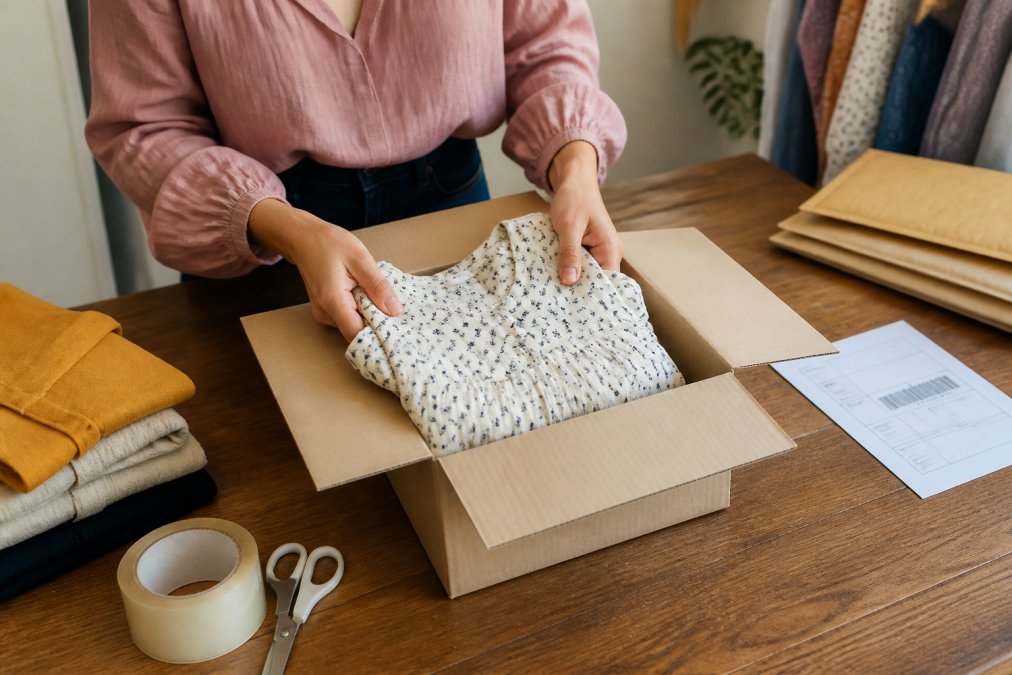
A few practical habits make this easier:
- Keep the original packaging for at least the length of the return window
- Include the packing slip or a note with your order number and reason for return
- Remove any personal items from pockets before sealing
- Photograph the packed parcel before shipping, in case it goes missing
If you're returning multiple items from different orders, package them separately. Combining orders into one box is a common mistake that delays refunds because the warehouse can't match items to transactions.
How to Get a Shipping Label and Return Authorization
A return authorization is the approval a seller issues before you ship an item back, and it usually comes bundled with a shipping label. Log into your account, open the order, and select the return option. Most retailers generate a prepaid label or a QR code you can scan at a drop-off location instead of printing anything.
What to Do if You Don't Have a Return Label
If no label appears in your account, contact customer support with your order number and ask them to issue one. Some sellers email labels within a day; others expect you to arrange and pay for shipping yourself. Keep the tracking number from whatever label you use, because it's your only proof if the parcel disappears in transit.
| Situation | Best Move | What to Keep |
|---|---|---|
| Prepaid label available | Print or save the QR code | Tracking number |
| No label in account | Contact customer support | Chat or email confirmation |
| Self-paid return | Use a trackable carrier | Receipt and tracking number |
| QR code only | Visit a drop-off location | Photo of the scan receipt |
How Long Do Online Returns Take to Process?
Most refunds are processed within 5 to 10 business days after the warehouse receives and inspects your return, though some sellers take up to two weeks during peak season (consumer.ftc.gov). The processing time starts when the item is scanned in, not when you drop it off, so add shipping time on top. A refund returns to your original payment method; a store credit posts faster but only works at that retailer.
Two things slow this down more than anything else:
- A missing return authorization number, which forces staff to hunt for your order manually
- Items that arrive without tags or in worn condition, which trigger an inspection hold
If your return window has closed and you're still waiting, call customer support with your tracking number. The carrier's delivery confirmation is the evidence that matters.
In-Person vs. Mail-In Returns: Which Is Easier?
An in-person return is faster when a retailer has a physical return bar or a partner drop-off nearby, because staff scan the item and issue the refund or exchange on the spot. A mail-in return is the only option for most online-only sellers, and it's slower but works from anywhere. The right choice usually comes down to three variables: speed, cost, and whether the seller even offers a brick-and-mortar option.
Speed. In-person returns skip the shipping and inspection wait entirely. When a retailer accepts in-store returns, the refund or exchange is typically issued the same day, and the item never enters a warehouse queue. Mail-in returns add carrier transit time on top of the 5-to-10-business-day inspection window, so a mail-in refund can take two to three weeks end to end.
Cost. This is where the two paths diverge most. Many retailers offer free in-store returns even when they charge for mail-in labels, because the store can restock the item immediately. Mail-in shipping costs are frequently deducted from your refund, commonly a flat fee per label, or the actual carrier rate for self-paid returns. Before you choose, check whether the seller's policy lists a return shipping fee and whether that fee is waived for in-store drop-offs.
Convenience. Mail-in returns win when there's no store nearby. Most sellers now offer a QR code you can scan at a carrier drop-off location instead of printing a label, which removes the printer requirement entirely. If you go this route, keep the scan receipt, it's your proof of drop-off if the parcel goes missing.
| Factor | In-Person Return | Mail-In Return |
|---|---|---|
| Refund speed | Same day to a few days | 5-10 business days after receipt |
| Typical cost | Often free | Flat fee or carrier rate, sometimes deducted |
| Label needed | No | Yes, or a QR code |
| Works for online-only sellers | No | Yes |
| Best for | Local stores with a return bar | Any seller, any location |
The International Return Gap Most Guides Skip
If you ordered from a seller based outside the country, the return math changes completely. International return logistics involve customs declarations, and the paperwork is on you, not the retailer. You'll typically need a customs form listing the item description, value, and reason for return, and you may be responsible for duties on the inbound shipment even though you're sending the item back.
A few practical realities:
- Return shipping on an international order can exceed the item's price, especially for bulky or heavy garments
- Some sellers refuse international returns entirely or only offer store credit
- Customs delays can push the return past the seller's inspection window, so document the ship date
- Mark the parcel clearly as a returned good to reduce the chance of a second duty charge
Before assuming an international return is worth it, compare the shipping quote against the refund amount. If the item is low-value, a store credit or a local resale may be the better move.
Damaged or Defective Items: How to Get a Full Refund
Damaged goods and defective items are treated differently from simple change-of-mind returns. When the fault is the seller's, the seller generally covers return shipping and issues a full refund, and you should not accept a restocking fee or any deduction in these cases. The key is documenting the defect before you ship anything back, because the burden of proof shifts to you the moment the item leaves your hands.
The Documentation Sequence That Protects Your Refund
- Photograph the item and its packaging before removing anything. Include the shipping label, the outer box, and the specific defect in the same frame if possible. Timestamped photos are stronger than undated ones.
- Contact customer support with your order number and photos. Ask for a prepaid label and confirm in writing that shipping is covered. A chat transcript or email reply is your record.
- Ship it back with tracking and keep the receipt. The carrier's delivery confirmation is the evidence that matters if the refund stalls.
- Follow up in writing if the refund doesn't post. Reference the return authorization number, the delivery date, and the promised refund amount.
When the Seller Pushes Back
If a seller refuses a refund on a genuinely defective item, cite their own published policy. Most retailers publish clear terms on faulty merchandise, and a written record of the defect makes a chargeback straightforward if it comes to that. A chargeback is a dispute filed with your card issuer or bank; you'll need the order confirmation, the defect photos, the return tracking number, and any support correspondence. Card networks generally allow chargebacks for goods that arrive damaged or not as described, but the window is limited, so don't wait months to file (consumerfinance.gov).
The Return-Fraud Flag Nobody Warns You About
Here's the part most guides leave out: sellers track return patterns on your account, and a defect claim that looks inconsistent with your history can trigger a return fraud flag. The industry term for buying an item, wearing it once, and returning it is wardrobing, and automated return systems are built to catch it. Signs that raise a flag include:
- Returning items with missing tags, perfume, deodorant marks, or visible wear
- A high ratio of returns to purchases over a short period
- Repeated "not as described" claims on items that arrive in sellable condition
- Returning the wrong item or an empty box, which is outright fraud and can lead to account closure
A defect claim is legitimate when the item genuinely arrived damaged. The way to keep it legitimate in the seller's system is to document early, report within the return window, and keep the item in the condition it arrived in until you ship it back. If your account does get flagged, contact customer support in writing and ask for the specific reason, most sellers will explain the flag and tell you what's needed to clear it.
Never wear an item "just to test it" and then file a defect claim. Sellers inspect returns, and a worn item returned as defective is the fastest way to lose both the refund and your account's free-return privileges.
Tips for Buying Trendy Clothes Online (So You Return Less)
Fewer returns start with better buying. Reading size charts, checking proof of purchase terms, and studying fit notes beats guessing every time. A few habits cut return rates sharply:
- Measure yourself and compare against each seller's specific size chart, not your usual size
- Read reviews that mention fit, fabric, and whether items run small or large
- Check the return policy before checkout, especially for final-sale items
- Keep tags attached until you've tried everything on
A handheld steamer helps here too. Wrinkled garments often look "wrong" straight out of the mail, and a quick steam can reveal the true fit before you decide to return. Our Folding Garment Steamer Handheld Portable is compact enough for travel and simple enough to use in a minute, which makes it easier to judge an item fairly before the return window closes.

Sustainability matters as well. Every return generates packaging waste and transport emissions, and retailers increasingly flag high return rates on customer accounts. Buying carefully isn't just cheaper; it keeps your account in good standing.
Repeatedly returning items without cause can trigger return fraud flags on your account. Sellers track patterns, and an account marked for policy abuse may lose free returns or be blocked entirely.
Returning online fashion orders shouldn't feel like a gamble, but it often does when policies, labels, and deadlines get confusing. At Jessiz Boutique, we offer a curated collection of trendy, affordable apparel for women and men, from dresses and swimwear to activewear and everyday essentials, with exclusive deals that make trying something new less risky. If you're tired of returns that eat your time, shop now with Jessiz Boutique and build a wardrobe you actually keep.
Frequently Asked Questions
How do I return clothes I bought online?
Start by checking the return window and policy on your order confirmation. Then log into the retailer's return portal, select the items you want to send back, and choose a reason for the return. Print the prepaid shipping label or save the QR code, repackage the clothes in their original packaging with tags attached, and drop the parcel at the carrier's drop-off location. Keep the tracking number and receipt until your refund posts.
Who pays for a return shipping label?
It depends on the retailer's policy. Many online fashion stores provide a prepaid label for defective or damaged goods but charge a deduction from your refund for change-of-mind returns. Some offer free returns as a perk. Before you ship anything back, read the fine print on restocking fees and shipping costs so you know exactly what will be deducted from your refund.
How long do online returns take to process?
Most online returns take 5 to 10 business days to process after the parcel arrives at the warehouse. Add 3 to 7 days for transit time with the carrier. Once processed, your refund or store credit is issued, and it can take another 3 to 5 business days for the money to appear on your statement. Keep your tracking number handy so you can confirm delivery.
Do I need the original packaging to return clothing?
Not always. Most retailers accept returns in any secure box or poly mailer as long as the item is in unused condition with tags attached. However, some brands require the original packaging or a specific return bar code on the outside of the parcel. Check the return policy first. If you've lost the original packaging, a clean cardboard box works for most mail-in returns.