

How to Build a Versatile Work From Home Wardrobe 2026
Table of Contents
- Start With a Work From Home Capsule Wardrobe Essentials Checklist
- How to Style a Capsule Wardrobe for Video Calls and Office Days
- Best Fabrics for All-Day Comfort in Work-From-Home Attire
- Budget-Conscious Scaling: Build Your Work From Home Wardrobe in Phases
- Body-Type Specific Styling for Versatile Silhouettes
- Care and Maintenance: Making Capsule Pieces Last Through 2026
- Where to Start Building Your 2026 Capsule
- Frequently Asked Questions
Last Updated: September 21, 2026
Start With a Work From Home Capsule Wardrobe Essentials Checklist
Building a versatile work from home wardrobe in 2026 starts with one decision: stop buying outfits and start buying a system. A work from home capsule wardrobe is a small, coordinated set of pieces that mix into many outfits, so you dress fast and still look polished on camera.
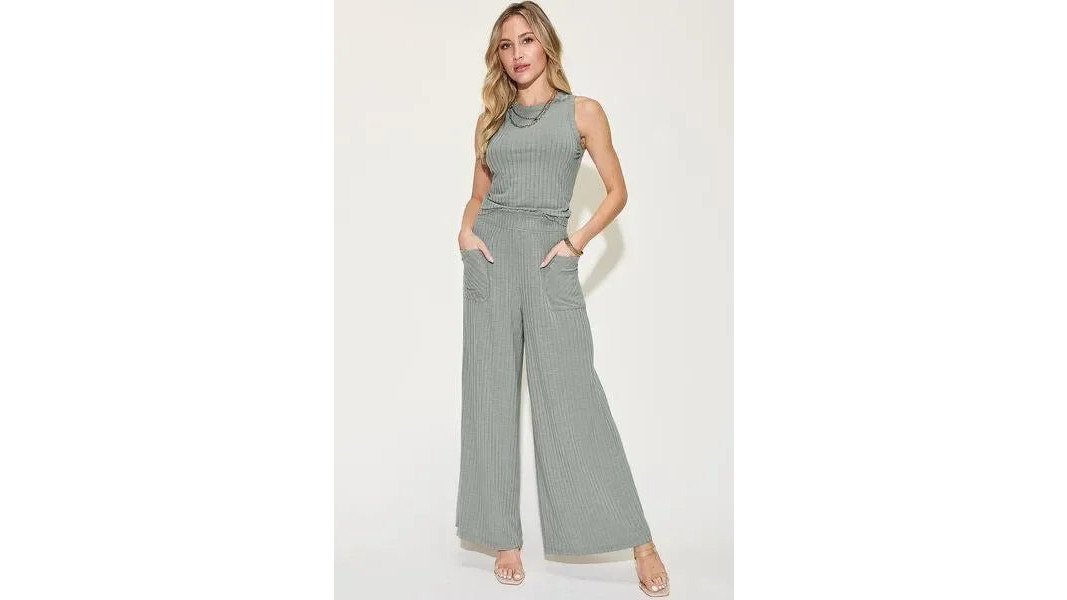
Before you add anything to your cart, run this checklist:

- 3-4 tops that read well on camera (structured knits, silk shirts, ribbed tanks)
- 2 bottoms with a clean line (tailored trousers, wide-leg pants, technical joggers)
- 1 unstructured blazer for instant professional polish
- 1 matching two-piece set for zero-effort days
- 1 pair of loafers or ankle boots for hybrid work days
- 1 layering piece (cardigan, overshirt, or light knit)
- A single color family across at least 70% of the capsule
That last point does more work than any individual item.
How to Style a Capsule Wardrobe for Video Calls and Office Days
Styling a capsule wardrobe for both video calls and office days comes down to layering. The same base pieces work in both settings; only the top layer changes. For a video call, a structured knit or silk shirt in a solid color gives you a clean line from the shoulders up. For an office day, add the blazer and swap house shoes for loafers.
Virtual Meeting-Specific Styling: What the Camera Actually Sees
For the day-to-night transition, the formula is additive, not a full change. Swap the knit for a silk shirt, add the blazer, change your shoes. That is a complete transition from home office to evening plans in under five minutes.
Best Fabrics for All-Day Comfort in Work-From-Home Attire
| Fabric | Comfort | Wrinkle Resistance | Camera Performance | Best For |
|---|---|---|---|---|
| Knitted polyester blend | High | High | Solid, holds shape | Two-piece sets, lounge-to-call pieces |
| Cotton-rich knit | High | Low | Soft, can pill | Cooler rooms, casual days |
| Washable silk | Medium | Medium | Excellent drape, catches light | Camera-facing shirts |
| Polyester, rayon, spandex | High | High | Reliable, low sheen | Everyday tops and wide-leg pants |
| Merino wool (fine gauge) | High | High | Matte, structured | Layering pieces, cooler months |
| Linen | High | Very low | Textured, creases visibly | Warm rooms, off-camera days |
A few mechanics worth knowing before you buy:
- Spandex content drives recovery, not stretch. A knit with 5% spandex snaps back to shape after a day of sitting; a 2% blend sags at the knees and elbows. If a piece is meant to be worn twice between washes, look for at least 4-5% spandex or elastane.
- Rayon and modal soften with washing but weaken when wet. They are the reason a blended top feels better after three washes, and the reason it can stretch out on a hanger if you hang it damp.
- Fine patterns moiré on webcams; solid colors and subtle textures do not. This is a fabric-and-weave issue as much as a color issue. A tight herringbone or micro-check can shimmer even in a neutral tone.
- Sheen reads as formal on camera; matte reads as casual. Washable silk and satin-finish blends photograph dressier than their weight suggests, which is useful for calls and less useful for a lounge day.
A practical rule for a capsule: keep two fabric families in rotation, one structured blend for camera days and one soft knit for focus days, and let the seasons decide which gets more wear. That way you are never relying on a single fabric to do every job.
The City Chic Zip-Up Hoodie & Pant Set →
Budget-Conscious Scaling: Build Your Work From Home Wardrobe in Phases
Budget-conscious scaling means buying your capsule in three phases instead of one, so each purchase gets tested before you commit more money. This is the single biggest gap in most capsule wardrobe advice, which assumes you can rebuild your closet at once. You do not need to.
Body-Type Specific Styling for Versatile Silhouettes
- Pear shapes (hips wider than shoulders): the goal is to add visual weight up top and skim the hip line. A structured knit or silk shirt with a defined shoulder, tucked or half-tucked into wide-leg or tailored trousers, balances the silhouette. An unstructured blazer worn open creates two vertical lines that slim the hip. Avoid clingy bottoms and cropped tops that stop at the widest point of the hip.
- Apple shapes (fuller midsection, narrower hips): the goal is a long vertical line and a waist placed slightly above your natural one. A structured blazer over a straight-leg bottom does most of the work. A matching two-piece set in a solid color reads as one continuous column, which is the most flattering option in the capsule. Skip belted waists that cinch at the widest point.
- Rectangle shapes (shoulders and hips close in width): the goal is to create definition. A belted or drawstring waist adds curve without bulk, and a two-piece set with a defined waistband does it automatically. Layering a cardigan or overshirt open adds dimension to a straight torso.
- Inverted triangle shapes (shoulders wider than hips): the goal is to soften the shoulder line and add volume below. Wide-leg pants and A-line or straight skirts balance the top. Choose knits with a softer shoulder, raglan or drop-shoulder, over structured blazers with sharp padding.
- Tall frames: the goal is to break up length so the eye has somewhere to rest. Cropped tops with high-waisted bottoms, color-blocked sets, and visible waist seams all interrupt a long vertical line. A monochrome head-to-toe look can make a tall frame read even longer than intended.
- Petite frames: the goal is to preserve an unbroken vertical line. Monochrome sets, shorter hemlines, and higher rises keep proportions from swamping you. Avoid oversized blazers that extend past mid-thigh and wide-leg pants that pool at the ankle, both shorten the leg line.
A practical next step: pick the two shapes above closest to your frame, then try on your existing capsule pieces with those goals in mind. Most people find one or two small adjustments, a half-tuck, a higher rise, an open blazer, unlock combinations they had written off.

Care and Maintenance: Making Capsule Pieces Last Through 2026
Care and maintenance is what separates a capsule that lasts two years from one that lasts two months. A small number of pieces worn often means each one takes more washing, so fabric care matters more in a capsule than in a large wardrobe.
- Wash cold, most days. Heat is the main cause of fading and shrinkage in blended fabrics.
- Tumble dry low or hang dry. High heat breaks down spandex and rayon over time.
- Turn knits inside out before washing to reduce pilling on camera-facing surfaces.
- Store sets together so you never hunt for the matching half.
- Rotate your pieces so no single item takes all the wear.
Where to Start Building Your 2026 Capsule
The hardest part of building a work from home wardrobe is not knowing what to buy. It is buying pieces that actually work together, in sizes that fit, at prices that let you build gradually. That is the problem Jessiz Boutique solves.
Frequently Asked Questions
What are the essential pieces for a 2026 work from home capsule wardrobe?
Start with 8 to 12 core pieces: two pairs of tailored trousers, one pair of technical joggers, three structured knits or silk shirts, one oversized blazer, a matching lounge set, and versatile footwear like loafers or ankle boots. Add transitional pieces such as a zip-up hoodie set you can wear together or separately. Stick to a cohesive color palette so every top works with every bottom. This gives you roughly 30 outfit combinations without a packed closet.
How do I apply the 3-3-3 rule to my work from home wardrobe?
The 3-3-3 rule means choosing three tops, three bottoms, and three pairs of shoes that all coordinate. For remote work, pick three structured knits or silk shirts, three bottoms (tailored trousers, technical joggers, and a wide-leg pant), and three shoe options (loafers, ankle boots, and clean sneakers). That is 27 outfit combinations from nine items. Build a second 3-3-3 set for warmer months so you cover seasonal wardrobe transitions without overbuying.
How can I balance comfort and professionalism in a remote work setting?
Choose durable fabrics with moderate stretch, like the polyester-rayon-spandex blend in a ribbed tank and wide-leg pant set, so you stay comfortable through long sitting sessions. For video calls, add one structured layer: an oversized blazer, a silk shirt, or a zip-front hoodie in a solid color. Keep the bottom half comfortable but tidy in case you need to stand. This combination reads as professional polish on camera while feeling like loungewear off it.
What is the 70/30 rule for building a sustainable wardrobe?
The 70/30 rule splits your closet into 70 percent timeless basics and 30 percent trend-driven or personality pieces. For a work from home wardrobe, that means most of your capsule should be elevated basics in neutral tones: tailored trousers, structured knits, and solid sets. Reserve the remaining 30 percent for statement items like an off-shoulder set in a bold color. This balance keeps your wardrobe rotation functional while still letting you express personal style.