

Why Online Clothes Fit Differently: A Complete Guide
Table of Contents
- Why Online Clothes Fit Differently: The Core Reasons
- How to Measure Your Body for Clothing Accurately
- How to Read Clothing Size Charts Effectively
- Tips for Buying Trendy Clothes Online Successfully
- The Hidden Costs: E-Commerce Returns and the Return Loop
- Inclusive Sizing and Gender-Neutral Approaches
- Common Mistakes to Avoid When Shopping Online
- Frequently Asked Questions
Last Updated: September 2, 2026
Why Online Clothes Fit Differently: The Core Reasons
When you order a dress online and it arrives two sizes too large, or pants that fit perfectly in the store feel completely different when shipped, you're experiencing a frustrating reality of e-commerce fashion. The reason goes far deeper than simple quality issues, it's a combination of manufacturing practices, sizing inconsistencies, fabric variations, and industry standards that don't always align across brands.
At Jessiz Boutique, we understand that fit is the number one reason customers return clothing. The disconnect between what you expect and what arrives isn't your fault. Understanding why this happens transforms your online shopping experience from frustrating to strategic.
The core issue is this: there is no universal standard for clothing sizes. A size 8 at one brand might be a size 10 at another. This inconsistency stems from multiple sources working against each other, and once you understand them, you can shop smarter.
Vanity Sizing and Size Label Inconsistency
Vanity sizing is the practice of labeling clothes with smaller sizes than their actual measurements to make customers feel better about their purchase. A garment that measures 38 inches at the bust might be labeled a size 6 instead of an 8. This marketing tactic has become so widespread that size labels have lost their connection to actual body measurements.
One retailer's size 8 might have a 32-inch waist, while another's measures 34 inches. Brands deliberately adjust their sizing to align with their target market's expectations. A luxury brand might use vanity sizing aggressively to attract customers who prefer smaller numbers. A mass-market brand might use more conservative sizing to reduce return rates.
When shopping in a physical store, you can try things on and adjust expectations in real time. Online, you're making decisions based on size labels that have become almost meaningless. Reading customer reviews becomes essential, real people telling you whether something runs small, true to size, or large provides information that the size label itself cannot.
Manufacturing Tolerances and Production Variability
Manufacturing tolerances refer to the acceptable range of variation in garment dimensions during production. Most brands allow for a tolerance of plus or minus half an inch to one inch in key measurements (astm.org). This means a batch of size 10 dresses might have waist measurements ranging from 33.5 to 34.5 inches, all considered acceptable.
This tolerance exists because perfect precision in garment manufacturing is nearly impossible. Fabric shrinks during washing and dyeing. Cutting equipment has slight variations. Sewing machines create seams with minor inconsistencies. When you order the same style from the same brand twice, you might receive two slightly different fits.
The geographic location of the factory also influences consistency. Factories in different countries use different equipment, labor practices, and quality control standards. A brand that manufactures the same style in two different countries might produce noticeably different fits, even with identical specifications.
Fabric Composition and Stretch Factor
Fabric composition, the blend of materials used in a garment, directly affects how clothing fits and moves on your body. A dress made from 100% cotton will fit differently than one made from 95% cotton and 5% spandex, even if they're cut to identical dimensions.
Natural fibers like cotton, linen, and silk have different stretch properties than synthetic fibers like polyester and nylon. Cotton tends to relax and soften with wear, potentially becoming looser over time (astm.org). Polyester holds its shape more consistently. The ratio of materials matters enormously, a fabric that's 90% cotton and 10% spandex stretches differently than one that's 80% cotton and 20% spandex.
Online retailers often source fabrics from different suppliers between seasons or production runs. A supplier might discontinue a specific fabric, forcing the brand to find an alternative. The new fabric has similar characteristics but not identical ones, so customers receive the "same" garment that actually fits differently.
How to Measure Your Body for Clothing Accurately
The foundation of successful online shopping is understanding your actual body measurements. Proper measurement requires the right tools, the right technique, and honesty about where your body actually sits.
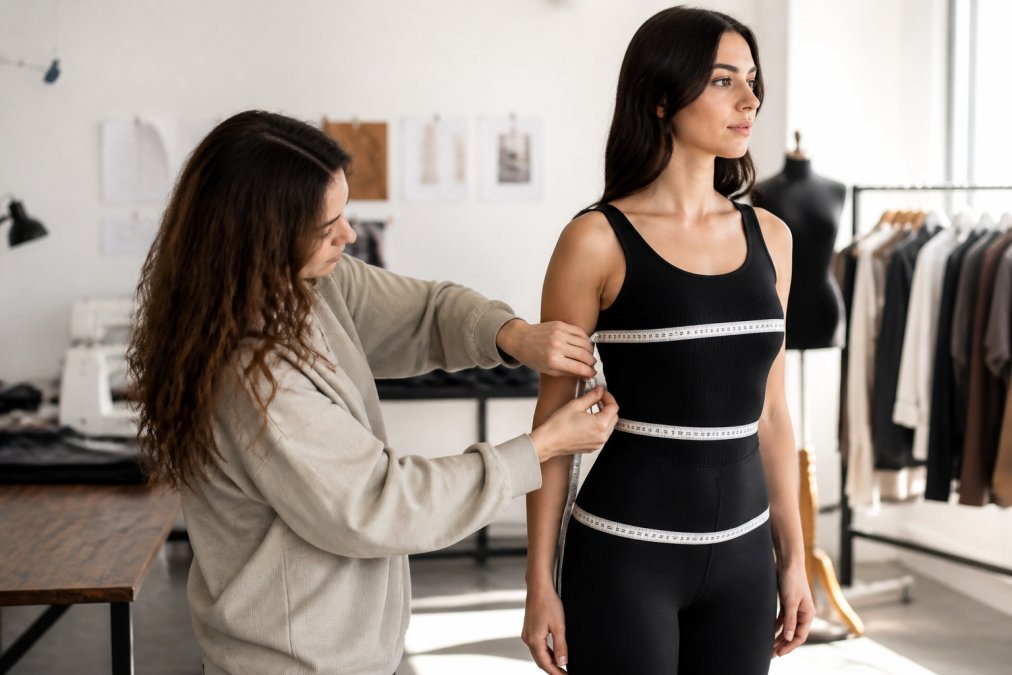
Essential Measurements: Bust, Waist, and Inseam
For bust measurement, wrap a soft measuring tape around the fullest part of your chest, keeping it parallel to the ground. Don't pull tight; the tape should sit snug but allow one finger to slide underneath. Measure wearing the bra you'll wear with the garment.
Your natural waist is typically the narrowest part of your torso, usually about an inch above your belly button. Stand relaxed, don't suck in your stomach or puff it out. The tape should sit horizontally without twisting. Many people measure their waist too low (at the hips) or too high (at the ribs), creating an inaccurate baseline.
Inseam is the measurement from your inner thigh down to your ankle. Wearing pants that fit well, measure from the crotch seam down to the hem. This measurement is crucial for pants fit and is often overlooked by online shoppers.
Record these measurements in a document or notes app on your phone. When browsing online, you can quickly compare your measurements against the brand's size chart, eliminating guesswork and dramatically reducing the chance of ordering the wrong size.
The Importance of Waist-to-Hip Ratio and Silhouette Fit
Waist-to-hip ratio is the relationship between your waist and hip measurements, which influences how different silhouettes will look on your body. Someone with a 28-inch waist and 38-inch hips has a different ratio than someone with a 30-inch waist and 36-inch hips, even if their overall size is similar.
Garment silhouettes are designed with specific proportions in mind. If your proportions differ significantly from the design's assumptions, the garment won't fit as intended, regardless of the size label. Understanding your silhouette type, whether you're more rectangular, pear-shaped, hourglass, or apple-shaped, helps you select styles that work with your proportions rather than against them. When shopping online, reading reviews from customers with similar body types becomes invaluable.
How to Read Clothing Size Charts Effectively
Size charts are your primary tool for translating your measurements into the right size. However, size charts vary wildly in usefulness and accuracy.
Understanding Measurement Accuracy and Standardized Sizing
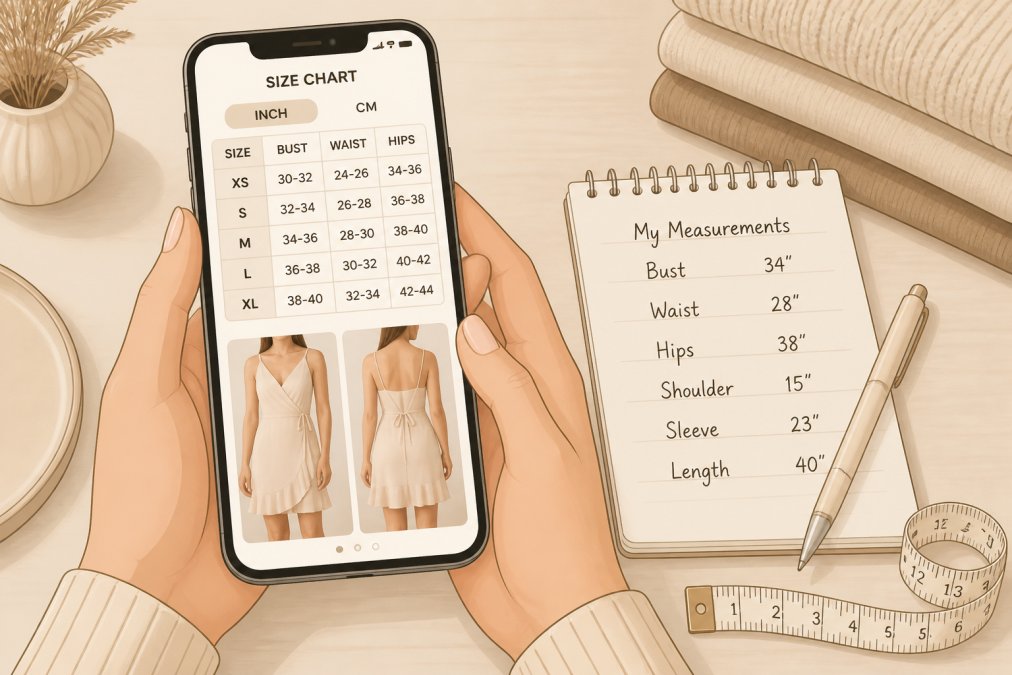
A quality size chart includes measurements for multiple points on the garment: bust, waist, hips, length, and sleeve length. These measurements should represent the actual garment dimensions, not the body measurements the size is "designed for." The most useful size charts include measurements taken from an actual garment laid flat on a table, not calculated from a fit model.
When comparing your measurements to a size chart, account for the intended fit. A fitted garment should measure close to your actual body measurements, with perhaps one inch of ease for comfort. A relaxed-fit garment should measure two to three inches larger than your body. An oversized garment might be four to six inches larger. If the chart doesn't specify the intended fit, look at product photos and customer reviews.
Comparing Your Measurements Against Brand-Specific Charts
Create a simple spreadsheet with your measurements and the size charts from your favorite brands. Over time, you'll notice patterns. You might consistently wear size 6 at one brand and size 8 at another. This brand-specific knowledge becomes your shopping shortcut.
When you encounter a new brand, check their size chart before ordering. If the chart seems inconsistent with other brands or lacks detail, read customer reviews specifically looking for fit feedback. Phrases like "runs small," "true to size," or "runs large" provide real-world data that supplements the official chart.
Pay attention to the garment type as well. The same brand's dress might fit differently than their pants. Manufacturing happens in different facilities, uses different fabrics, and follows different patterns.
Tips for Buying Trendy Clothes Online Successfully
Strategic shopping approaches minimize fit surprises and reduce returns.
Using Customer Reviews and Fit Technology
Customer reviews are your most reliable source of real-world fit information. Look specifically for reviews that mention sizing and fit. A review that says "I'm normally a size 8 and ordered a 10 because the reviews said it runs small, and it fits perfectly" tells you exactly how that specific garment behaves.
Pay attention to reviewers who share their body measurements or comparison information. Someone who says "I'm 5'6" with a 28-inch waist and 38-inch hips, and the medium fits me perfectly" gives you a reference point if you have similar proportions. Reviews from customers with different body types help you understand whether a garment's fit issues are universal or specific to certain silhouettes.
Some retailers now offer fit technology tools, virtual try-on features, or fit prediction algorithms. These tools vary dramatically in accuracy and work best for simple styles. Use these tools as supplementary information, not primary decision-makers.
Regional Sizing Standards and Luxury vs. Mass-Market Differences
Sizing varies not just between brands but between market segments. Luxury brands often use vanity sizing more aggressively than mass-market brands. A luxury brand's size 6 might be significantly smaller than a mass-market brand's size 6.
Brands that manufacture in different regions also experience sizing variations. European sizing standards differ from American standards. Asian sizing tends to run smaller overall. Understanding your brand preferences helps you shop more efficiently.
At Jessiz Boutique, we curate pieces that balance quality with accessibility, giving you that luxury-inspired fit without the luxury price tag. Our size charts are detailed and our customer reviews are honest about fit, helping you make confident decisions.
The Hidden Costs: E-Commerce Returns and the Return Loop
Returns represent a significant hidden cost in online fashion. When you order multiple sizes to try on at home, or order knowing you might return it, you're participating in what the industry calls the "return loop."
Many online shoppers order multiple sizes of the same item, keep one, and return the others. Retailers factor these return rates into their pricing. When return rates climb above 30 percent, retailers increase prices to compensate for processing returns, restocking, and dealing with items that can't be resold (peer-reviewed research).
The environmental impact is significant. Returned clothing requires shipping back to warehouses, often thousands of miles. Many returns end up in landfills. The carbon footprint of a returned garment often exceeds the carbon footprint of the original shipment.
Shopping strategically, measuring carefully, and reading reviews reduces your personal return rate. When you buy with confidence based on accurate information, you keep more of what you order. This saves you time, reduces your environmental impact, and supports sustainable shopping practices.
Inclusive Sizing and Gender-Neutral Approaches
The traditional approach to clothing sizing, separate men's and women's categories with limited size ranges, doesn't serve everyone. Inclusive sizing and gender-neutral design represent a shift toward clothing that fits diverse body types and doesn't assume gender based on fit preferences.
Gender-neutral sizing focuses on fit rather than gendered marketing. A gender-neutral shirt might be available in a range of sizes that accommodates different body shapes without labeling them as "men's" or "women's." This approach recognizes that body diversity exists across all genders.
Extended size ranges represent another aspect of inclusive sizing. Brands that previously offered sizes 0-14 now often extend to size 24 or beyond. This expansion requires different patterns and grading systems. Inclusive sizing also means considering fit for people with disabilities, different mobility levels, and different body compositions. Adaptive clothing, designed with features like magnetic closures or seamless construction, serves people whose fit needs differ from the mainstream.
Common Mistakes to Avoid When Shopping Online
Certain shopping habits virtually guarantee fit problems. The first mistake is ignoring size charts entirely and ordering "your usual size" across all brands. Your usual size varies between brands, and assuming consistency leads to disappointment. Always check the specific brand's size chart.
The second mistake is focusing only on price without considering fit information. A garment that's 40 percent off but arrives in the wrong size costs more than a full-price item that fits perfectly.
The third mistake is ordering multiple sizes "just to be safe" without a clear plan. Be intentional about your sizing decision. Order one size based on careful measurement and chart comparison.
The fourth mistake is ignoring fit model information. Some brands include photos of the garment on a fit model with her measurements listed. This real-world reference point is invaluable.
The fifth mistake is not accounting for fabric care and shrinkage. Natural fibers like cotton and linen shrink when washed. If you plan to machine wash your garment, order a size slightly larger than your measurements suggest. The care tag provides this information; use it in your sizing decision.
Shopping for trendy clothes online doesn't have to be a gamble. When you understand why online clothes fit differently, the role of vanity sizing, manufacturing tolerances, fabric variations, and inconsistent standards, you can approach each purchase strategically. Measure yourself accurately, read detailed size charts, check customer reviews from people with similar body types, and make intentional sizing decisions.
At Jessiz Boutique, we're committed to transparent sizing and honest product descriptions. Our detailed size charts reflect actual garment measurements, our customer reviews include genuine fit feedback, and our curated collection emphasizes quality pieces that deliver consistent fit. Shop with confidence knowing that we've invested in the information and practices that make online shopping successful. Discover your next favorite outfit by starting with accurate measurements and brand-specific sizing knowledge.
Frequently Asked Questions
Why do online clothes fit differently than the same size in physical stores?
Online clothes fit differently due to several factors: vanity sizing varies significantly between brands, manufacturing tolerances create inconsistencies even within the same size label, and you can't physically try garments before purchase. Fabric composition, stretch factor, and regional sizing standards also play major roles. Without seeing how a garment drapes on your body or feeling the textile quality, fit becomes unpredictable. This is why many shoppers experience higher return rates with online purchases.
How do I accurately measure my body for clothing when shopping online?
Use a soft measuring tape and have someone assist you for accuracy. Measure your bust at the fullest point, waist at the narrowest part, and hips at the widest point. For pants, measure your inseam from your inner thigh to your ankle while standing barefoot. Wear fitted clothing during measurement to avoid adding extra fabric to your numbers. Keep your measurements in a document and compare them directly against each brand's size chart, never assume your typical size will fit across different retailers.
Should I trust size charts or customer reviews more when buying online?
Use both strategically. Size charts show standardized measurements and indicate whether a brand runs small, large, or true to size. Customer reviews provide real-world fit feedback from people with similar body types and preferences. Read reviews that mention specific measurements (like 'I'm 5'6" and usually wear a medium') to find comparable feedback. However, remember that fit preference is subjective, one person's 'perfect fit' might feel tight to another. Combine chart data with multiple reviews for the most reliable decision.
What is vanity sizing and how does it affect my online purchases?
Vanity sizing is when brands label garments smaller than their actual measurements to make customers feel they wear a smaller size. A size 6 from one brand might have the same actual measurements as a size 8 from another. This practice is common in mass-market fashion and creates confusion across online retailers. When shopping online, always reference the actual measurements on size charts rather than relying on the size label number. This prevents the frustration of ordering what you think is your size only to receive something that doesn't fit your body's actual dimensions.
This article was written using GrandRanker